
How restaurants transform patios into predictable, profitable dining rooms—no matter the forecast.
But the forecast flips at 6:42 p.m.—a gust, a cold sprinkle, and glassware starts to chatter. It’s a slammed Saturday: 56 patio seats turning every 45 minutes, servers dialed in, kitchen cruising. In three minutes, momentum stalls. The host is reworking pacing, the reservation queue grows restless, and your most reliable sales engine suddenly feels fragile. We see it every weekend.
You start comping appetizers to calm tables, reseat 24 guests inside, and rush resets that soak linens and tempers. Two servers are now redundant, bartenders over-prepped, and the check average drops as patio cocktails go unsold. By close, you’re down two turns and a few online reviews that mention “great food, chaotic service.”
What if that flip didn’t flip your night? Imagine keeping the open‑air vibe when skies behave—and, with a quiet switch, sheltering guests in minutes when they don’t. Same seats, same pacing, same hospitality. Curious how operators make weather irrelevant without losing the patio magic? Let’s widen the lens.
Let’s widen the lens: outdoor seating isn’t a summer bonus anymore—it’s a core revenue engine. Guests crave fresh air for vibe and comfort, even in shoulder seasons. Meanwhile, indoor capacity is capped by floor plan and egress, so we see patios absorb the peaks you can’t seat inside. A 40‑seat terrace can add a full dining room without a lease. When it’s open, you smooth waits, shorten queues, and keep walk‑ins. That’s real volume. And real margin.
You plan around it. Managers back into daily targets assuming those 40–80 patio seats will turn 1.5–2.0 times. If your average check per person is $35, that’s $2,100–$5,600 you’re counting on tonight. Bar programs ride that air too—spritzes, rosé, shareable plates. When the terrace flows, kitchen and labor hum at the ratios you promised the owner or landlord. Miss that capacity, and the math shifts fast. Fewer turns. Lower check mix. Overtime you didn’t forecast.
Without over-claiming, note industry observations: patios drive higher table turns in mild weather, upsell potential for premium views, and social-shareable spaces that boost discovery.
Set up the core issue: you can’t forecast a seating chart the sky keeps changing.
Then the sky asserts itself. A sudden shower at 7:10, wind bursts that topple umbrellas, or a heat spike that cooks a west‑facing deck. Lately, smoke and air‑quality alerts add a new variable. In minutes, you’re comping rounds, juggling no‑shows who won’t sit inside, and rushing resets that soak linens and morale. Service gets choppy, pacing slips, and the vibe turns inconsistent table to table. Guests notice. So do your end‑of‑night numbers.
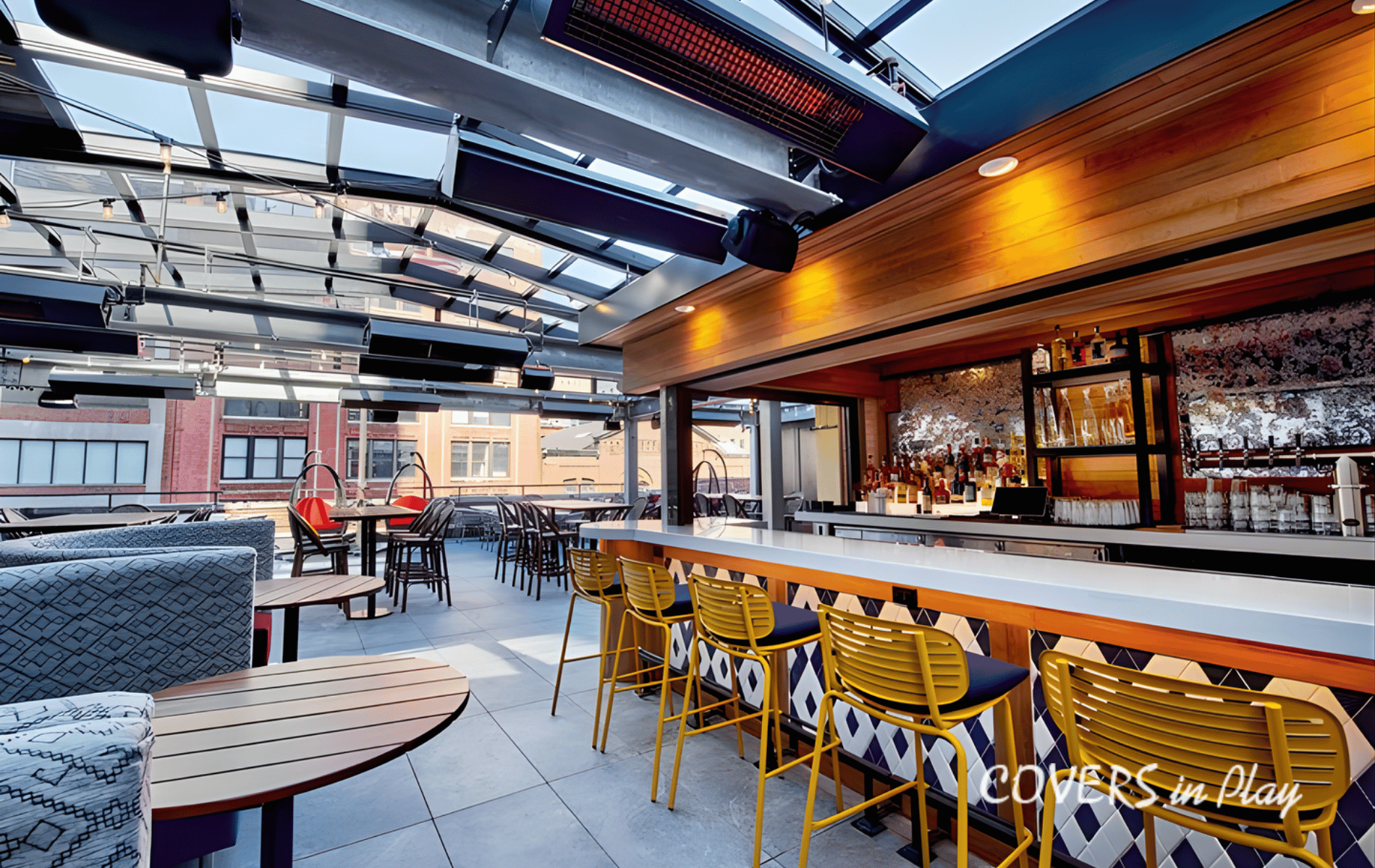
Picture a birthday party under parasols when the wind shifts; suddenly candles won’t light and servers are sprinting hot plates through drizzle. A couple booked for the sunset view expects that view, not a scramble to a two‑top by the restroom. You apologize, offer dessert, and lose the upgrade to that magnum on the list. Meanwhile, the inside bar is slammed with displaced guests, while half the patio sits empty because cushions are soaked. Expectations break.
Operationally, volatility wrecks planning. You staff for sun and pay for rain, or vice versa—erratic schedules, overtime spikes, and bored servers you don’t send home. Prep goes to waste; par levels set for patio volume turn into next‑day specials. Prime cost rides a roller coaster. To hedge, you overbook outside and then pull tables or relocate guests, creating choke points at the host stand and a cascade of pacing issues all night.
The brand takes the hit. Weather ruins proposals, graduations, and once‑a‑year splurges, and reviews punish inconsistency more than anything. Ad‑hoc fixes—tarps, box fans, propane mushrooms—can miss shade and ventilation requirements, or run afoul of local fire and accessibility rules. One complaint to the city, and your temporary workaround becomes a compliance headache you can’t ignore.
Summarize the gap: fixed awnings, tents, and umbrellas can’t adapt to changing conditions or code requirements the way a dining room needs.
Conclude: the goal isn’t cover—it’s controllable capacity with guest-worthy ambiance.
So the goal isn’t cover—it’s controllable capacity with guest‑worthy ambiance. That’s exactly what a retractable structure gives you. On blue‑sky days, sections open fully so air moves, music carries, and the patio feels truly alfresco. When weather turns, you close the roof and sidewalls in minutes while guests stay put—no scramble, no soaked linens. Service flow stays intact, pacing stays steady, and sightlines and sunsets remain visible through clear glazing. Comfort is consistent; the vibe stays on‑brand.
Speed matters during service. You can shift from open sky to sheltered comfort between turns, quietly, without relocating a single chair. When it’s perfect outside, everything tucks away to preserve natural airflow, daylight, and that open‑air energy your guests pay for. When it isn’t, you keep every seat and every check while staff stays in rhythm. That’s the relief. Next, we’ll map how this moves from walk‑through to first seating.
Introduce Covers in Play advantages: patented automated drive system for effortless operation, durable materials engineered for loads, refined aesthetics, and a 20-year warranty.
Planning a restaurant upgrade? Explore our restaurant patio enclosures and broader patio enclosures to compare layouts, finishes, and integration options.
Show the revenue logic with relatable scenarios; table below estimates added revenue and payback under typical service patterns.
| Scenario | Added seats | Avg turns/day | Avg check (USD) | Added daily revenue (USD) | Payback estimate |
| Small bistro | +16 | 1.5 | $35 | $840 | 8–12 months |
| Busy brunch spot | +24 | 2.0 | $28 | $1,344 | 6–9 months |
| Upscale dinner house | +30 | 1.8 | $60 | $3,240 | 4–7 months |
| Hotel rooftop bar | +40 | 2.5 | $22 | $2,200 | 6–10 months |

After you book your complimentary consult, we move from hello to handoff on a predictable timeline. We schedule noisy work pre‑open, mid‑afternoon lulls, or dark days to protect service, and we keep job sites spotless. We collaborate with you, your architect, and your GC (general contractor), and coordinate early with the local authority having jurisdiction (AHJ), so the enclosure fits your brand, meets code, and sails through approvals.
Typical delivery path looks like this:
If your venue includes a pool or hybrid deck, note that retractable roof options for pool-adjacent spaces are available—see retractable pool enclosure solutions.
Building on those pool‑adjacent options, your poolside bar can feel wide open on calm afternoons and become sheltered comfort when a breeze or sprinkle rolls in—without moving a chair. Resorts keep lounge seating active during pop‑up showers by closing sections in a single server cycle (about 2–3 minutes). Community centers keep lessons and lap swim on schedule while parents stay dry and comfortable. Clear glazing (crystal‑clear panels) preserves lifeguard sightlines, and dry cushions mean fewer resets and more hours you can monetize.
Hotels use retractable roofs to protect breakfast patios and sunset cocktails, then reopen for stargazing as skies clear. Rooftop lounges on the 10th floor tame gusts with transparent walls that keep skyline views and 40–60 seats booking through shoulder seasons. Aquatic centers get reliable temperature control and quiet operation, so whistles and instructions carry. Curious about codes, noise, ventilation, or maintenance in these settings? We answer the most common questions next.
If you’re exploring designs, compare our retractable pool enclosures, browse real‑world swimming pool retractable enclosures, and see purpose‑built commercial pool enclosures for hotels and aquatic facilities.
How does a retractable structure perform in wind, rain, or snow loads?
From hotel rooftops to aquatic facilities, performance starts with engineering to your local wind and snow loads. We design the structure for site-specific ratings and use gasketed joints (tight-sealing connections) with integrated drainage (hidden gutters and downspouts) to move water away. Before storms, staff can close sections in minutes and lock them down. Safety features include obstruction detection, keyed controls, and manual override. Maintenance is simple: quarterly track checks, annual inspection, and periodic seal replacements to keep everything tight.
Will this require HVAC or complex permits like a permanent addition?
Clarify that many installs avoid full HVAC integration by preserving natural ventilation when open, yet seal effectively when closed; permits vary—engineering support and AHJ coordination included. HVAC means heating, ventilation, and air conditioning; AHJ means the authority having jurisdiction (your local building and fire officials). We provide stamped drawings and code summaries to streamline approvals.
What’s the typical installation timeline and disruption to service?
Outline common timelines from approval to install; most assembly happens quickly with off-site fabrication. Work can be staged to protect peak hours and minimize downtime. Typical path: design and permits 4–8 weeks, fabrication 6–10, on‑site install 3–7 days while lunches and dinners stay open.
How do we keep the space comfortable without losing the ‘outdoor’ feel?
We keep the outdoor feel with partial opens: slide back the roof 50–80% and crack leeward panels for cross‑breeze. Operable sidewalls and clerestory (high-level) vents create stack ventilation (warm air rises and escapes). Sun-control glazing (low‑e, low‑emissivity coating, or light tint) softens glare while preserving daylight and views. Add discreet fans or heaters to fine‑tune comfort without changing the vibe.
What makes Covers in Play different?
Our patented automated drive makes openings smooth and quiet, even mid-service. We back structures with a 20‑year warranty and custom aesthetics that match your brand—clean lines, clear views, integrated lighting. Book a complimentary design consultation for a concept layout, budget range, and an ROI (return on investment) snapshot—no pressure, just a plan.
Ready to turn weather into a competitive advantage?
You just asked about costs, codes, comfort—and how our patented automation and 20‑year warranty hold up. Send a quick sketch, dimensions, current seat count and turns, plus two or three photos. We’ll review fast (48 hours), then share feasibility, concept guidance, and a ballpark ROI (return on investment) snapshot tied to your actual service pattern. Want clarity on finishes and glazing? We’ll outline options that fit your brand and budget.
No pressure—use the plan with your team or landlord to compare paths. Most projects follow a clear, low‑disruption timeline: design and permits 4–8 weeks, fabrication 6–10, install 3–7 days scheduled around peak hours. The benefit is simple: full patio revenue in rain or shine, the same open‑air vibe when skies are clear. Book now and we’ll confirm a time today.

 905-589-3000