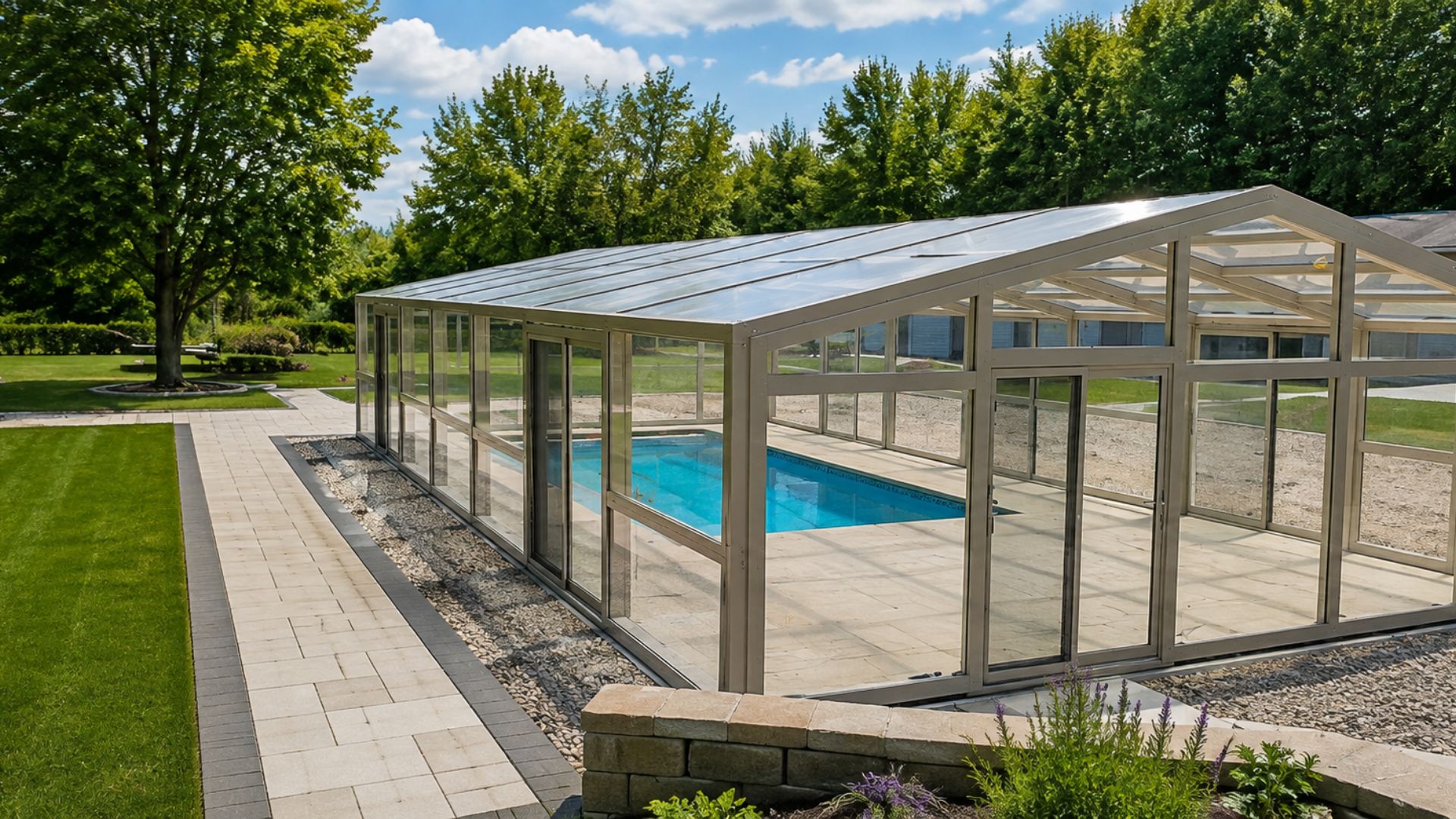
If you are researching pool enclosures for the first time, you have probably already discovered that the market offers a wide and sometimes confusing range of options. Fixed structures, retractable systems, pool domes, lean-to enclosures, freestanding units — the terminology alone can be enough to slow a buying decision to a standstill.
This guide cuts through the noise. By the time you finish reading, you will have a clear understanding of every major pool enclosure type, what each one is best suited for, and how to begin narrowing the options down to what fits your specific situation.
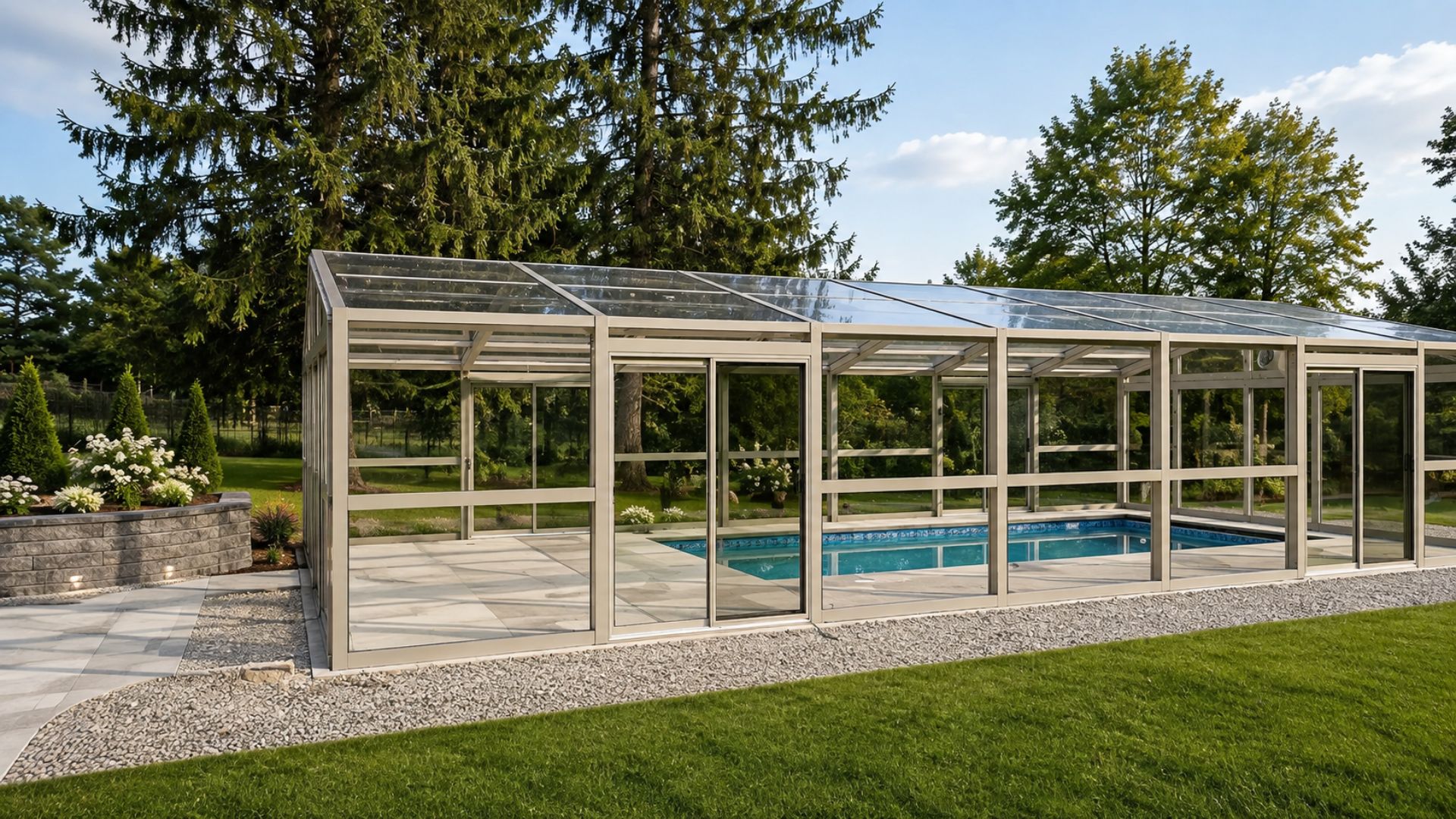
A pool enclosure is a structure that surrounds your swimming pool — covering the sides, the top, or both — to create a protected environment around the water. Depending on the design, an enclosure can turn an outdoor pool into an all-weather retreat, reduce maintenance dramatically, improve energy efficiency, and extend the swimming season from a few summer months to a full twelve months per year.
Enclosures are built from aluminum framing and glazing panels — typically polycarbonate or tempered glass — that allow natural light in while keeping weather, debris, and insects out.
They can be attached to an existing home or building, or designed as completely freestanding structures. They can be fixed permanently in place, or built to retract on a track system that opens the pool fully to the outdoors when conditions are favorable.
A fixed enclosure is a permanent, stationary structure. It does not move. Think of it as a custom-built glass house over your pool — one that provides year-round protection from weather, UV radiation, insects, and debris.
Fixed enclosures are typically the most affordable option because they do not require the engineering complexity of a retractable drive system. They are a strong choice for homeowners who primarily want indoor swimming conditions regardless of the season, rather than the flexibility to open the pool to the sky.
Doors and operable windows can be incorporated to allow fresh air circulation during milder weather. This makes a well-designed fixed enclosure surprisingly comfortable even in summer.
A manual retractable enclosure uses the same telescoping bay system as an automated unit but relies on physical effort to open and close. The individual bays slide along a low-profile track and stack together at one end when retracted.
This option offers the flexibility of indoor-outdoor conversion at a lower price point than automation. It is a reasonable choice for homeowners who are budget-conscious but still want the option to fully open their pool to the outdoor environment.
The practical limitation is that manual operation typically requires two people and around ten minutes to complete a full open or close cycle. For some households, that effort is not a barrier. For others, it is enough friction to leave the enclosure in a fixed position most of the time.
An automated retractable enclosure is the premium category — and the one that genuinely changes how homeowners experience their pool day to day.
Using a patented motorized drive system, the entire enclosure opens or closes at the push of a button. Every bay glides silently along the track in under sixty seconds. One person, from anywhere near the enclosure, can complete the full operation without touching the structure physically.
That ease of use matters more than it might seem. When opening an enclosure requires no effort, people open it more often — for spontaneous morning swims, for impromptu gatherings, for a midweek dip on a clear winter afternoon. Automated enclosure owners consistently report using their pools far more frequently than they did before installation.
Covers in Play’s automated pool enclosure systems are engineered with concealed stainless steel tensioning rods for extreme wind and snow resistance, and are backed by a 20-year site-specific warranty.
A pool dome is a specific type of enclosure design characterized by a curved or peaked roof profile rather than a flat or traditional gable shape. The term is sometimes used interchangeably with “pool enclosure,” but the two are distinct.
Pool domes can be fixed or retractable. They are particularly well-suited to freestanding applications where the enclosure is positioned independently of the house, and they are popular for both residential and commercial pools.
The dome structure’s curved geometry provides excellent structural strength for larger spans — making it a common choice for hotel pools, community facilities, and commercial installations where interior height and clear-span dimensions are important.
Covers in Play offers both pool dome and traditional enclosure configurations, with the right choice depending on the specific site and use case.
An attached enclosure connects to the wall of your home or an adjacent building. The roofline of the enclosure meets the exterior wall at a house attachment point, and homeowners can walk directly from indoors to the pool area without stepping outside. This configuration is ideal for cold-climate use where uninterrupted indoor-to-pool access is a priority.
A freestanding enclosure is fully self-supporting and placed independently of any existing structure. It offers maximum site flexibility and can be positioned anywhere the pool is located, regardless of proximity to the home.
A lean-to is a hybrid configuration — freestanding in its support but designed to sit flush against an existing wall on one side. This is a common choice for restaurant patio applications and commercial properties where the enclosure is attached to a building wall but not structurally dependent on it.
The shape of the enclosure’s roof affects structural performance, interior height, light quality, and visual compatibility with your home’s architecture.
A single-peak roof, also called a gable roof, offers a clean, classic profile that works well with most residential architectural styles. A triple-peak or gambrel-style roof provides additional structural strength and increased interior ceiling height — beneficial for larger pools or applications where headroom matters. Multi-peak designs suit very large enclosures and commercial applications where maximum structural strength is required over wide spans.
Our architectural design details on Covers in Play provides detailed technical specifications on each roof profile option for architects and specifiers.
With this foundation in place, you can begin filtering your choices based on five key questions:
Answering these honestly will point you toward a clear category. From there, a design consultation with Covers in Play will translate that clarity into a proposal specific to your property, your pool, and your goals.

 905-589-3000