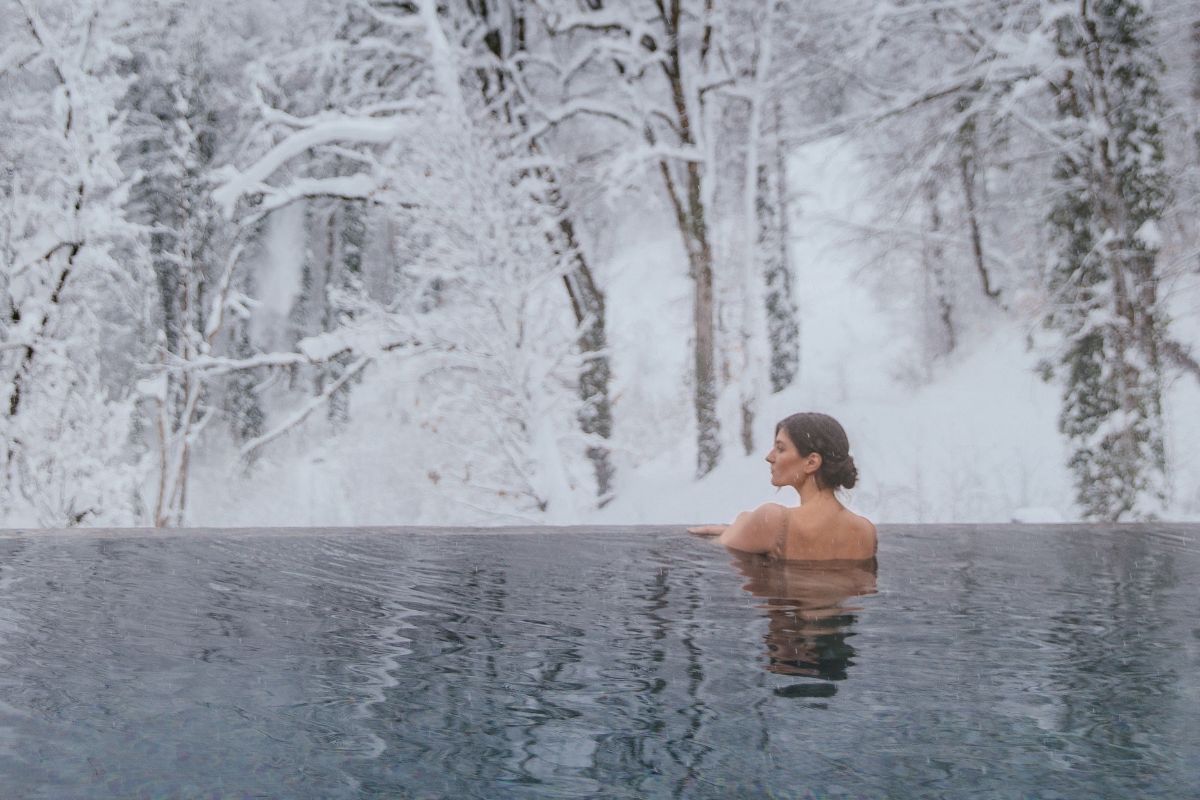
For many homeowners across the northern United States, the swimming season lasts only a few short months. By late September or early October, cooler temperatures arrive, leaves begin covering the water, and the pool remains unused until spring. That leaves one of your home’s biggest outdoor investments sitting idle for nearly half the year.
A winter pool enclosure changes that completely. A properly engineered enclosure transforms an outdoor pool into a protected, climate-controlled environment where you can enjoy swimming in January just as comfortably as you do in July. Whether you own a residential backyard pool or operate a commercial aquatic facility, a four-season pool enclosure extends the value of your investment by making it usable every month of the year.
However, not every enclosure is built for winter. Heavy snow, freezing temperatures, strong winds, and ice accumulation require structural engineering that goes far beyond a basic pool cover or screen enclosure. This guide explains everything you need to know about winter pool enclosures, including how they’re engineered, the best heating options, how they perform in cold climates, and why choosing the right manufacturer makes all the difference.
A winter-ready pool enclosure offers far more than the ability to swim during colder months. It transforms how you use your pool while reducing maintenance and operating costs throughout the year.
The biggest advantage is obvious: your pool no longer becomes a seasonal investment.
Instead of using your pool for only a few months each year, a properly designed enclosure allows your family to swim throughout every season. Homeowners can enjoy morning laps in February, children can swim after school during the fall, and hotels, resorts, and fitness centers can continue generating revenue long after outdoor pools would normally close.
Considering many pools represent an investment of $60,000 or more, extending their usable season dramatically improves their long-term value.
Without protection, winter weather exposes your pool to snow accumulation, ice, fallen branches, leaves, and wind-blown debris.
A pool enclosure creates a permanent protective barrier that helps keep the water cleaner, reduces spring cleanup, protects equipment, and minimizes wear on pool finishes and filtration systems.
Pool enclosures naturally capture solar energy during the day while reducing heat loss overnight.
Even without supplemental heating, enclosed pools retain significantly more warmth than outdoor pools. Because evaporation is greatly reduced, pools also require fewer chemicals to maintain proper water balance throughout the season.
These energy and maintenance savings continue to add up year after year.
Enclosed pools require considerably less day-to-day maintenance.
Leaves stay out of the water. Wind-blown dirt is minimized. Algae growth is easier to manage because environmental conditions remain more stable. Many pool owners find they spend less time cleaning and more time actually enjoying their pool.
A pool enclosure does much more than protect the water.
It creates an attractive indoor-outdoor living area that can be enjoyed throughout the year. Even on cold winter afternoons, sunlight entering through the glazing naturally warms the enclosed space, creating a comfortable environment for relaxing, entertaining guests, or spending time with family.
Winter performance is where quality engineering truly matters.
Snow doesn’t simply rest on the roof. It accumulates, drifts, melts, refreezes, and can place thousands of pounds of additional weight on a structure. Freezing temperatures stress materials, while winter storms create powerful wind loads that challenge even well-built enclosures.
A properly engineered enclosure is specifically designed to handle these conditions safely.
The structural frame is the foundation of every pool enclosure.
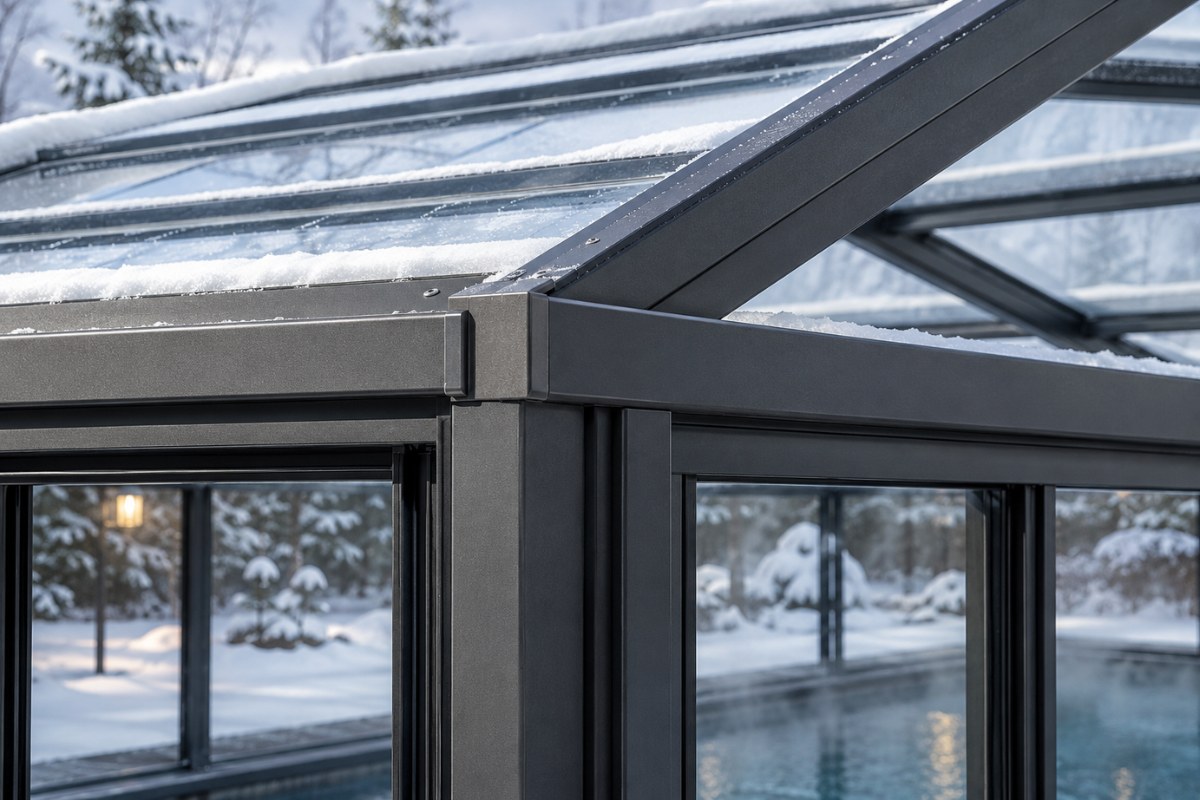
Covers in Play builds its enclosures using heavy-duty extruded aluminum framing because it offers the ideal combination of strength, durability, and corrosion resistance.
Unlike steel, aluminum won’t rust when exposed to humidity, pool chemicals, or years of outdoor weather. It also performs exceptionally well through extreme temperature swings, making it ideal for climates that experience freezing winters and hot summers.
Perhaps most importantly, Covers in Play’s structural systems require no interior cross-bracing.
Instead, structurally preloaded aluminum profiles provide exceptional strength while maintaining wide-open views, maximum natural light, and a clean architectural appearance.
Every region of the United States has specific snow load requirements established by local building departments and applicable building codes.
These design loads are typically measured in pounds per square foot (psf) and vary significantly depending on location. Areas throughout Colorado, Minnesota, Michigan, New York, New England, and other northern states often experience snow loads exceeding 50 psf, with drifting snow creating even greater structural demands.
Rather than using a one-size-fits-all design, Covers in Play engineers every enclosure for the exact installation site.
Each project considers roof pitch, span length, local code requirements, expected snow accumulation, and appropriate safety factors to ensure reliable long-term performance.
Roof shape plays a significant role in winter performance.
Steeper roof pitches naturally encourage snow to slide off the enclosure, reducing the amount of weight carried by the structure. Larger spans require additional structural engineering to safely support greater loads.
Covers in Play offers several roof configurations—including single-peak, double-peak, and triple-peak designs—to accommodate different pool sizes, architectural styles, and structural requirements.
Every enclosure is customized to balance aesthetics with engineering performance.
The glazing panels do much more than allow sunlight inside.
During winter they must resist impacts from hail and wind-driven debris, reduce heat loss, control condensation, and remain clear through changing temperatures.
Common glazing options include:
A lightweight, highly durable material offering excellent insulation and outstanding impact resistance. Multiwall polycarbonate is often the preferred choice for cold-climate installations because it combines thermal efficiency with long-term durability.
Solid glazing provides exceptional clarity while maintaining excellent impact resistance, making it ideal when unobstructed views are a priority.
Glass offers the highest level of visual clarity and premium architectural appeal. Depending on the project, insulated glass units (IGUs) can also provide excellent thermal performance while creating a luxurious appearance.
Covers in Play works with all three glazing options, selecting the best solution based on each client’s climate, performance requirements, architectural goals, and budget.
A pool enclosure alone can dramatically extend the swimming season by capturing passive solar heat.
On bright winter days, temperatures inside the enclosure can rise well above outdoor conditions without supplemental heating. However, for true year-round swimming throughout colder parts of the United States, an active heating system provides the comfort needed to enjoy the pool in every season.
For homeowners who plan to swim throughout the winter, hydronic heating is one of the most effective solutions.
Hydronic systems circulate heated water through tubing installed beneath the pool deck or along the enclosure’s perimeter, delivering consistent, even warmth throughout the enclosed space.
These systems operate quietly, efficiently, and can be programmed remotely to warm the enclosure before you arrive home, ensuring it’s comfortable whenever you’re ready to swim.
The pool water itself must also remain at a comfortable temperature.
Heat pumps, natural gas heaters, and electric pool heaters all become significantly more efficient when paired with an enclosure because evaporation—the primary source of pool heat loss—is dramatically reduced.
Many homeowners report substantial energy savings after installing an enclosure simply because their pool retains heat much more effectively.

 905-589-3000