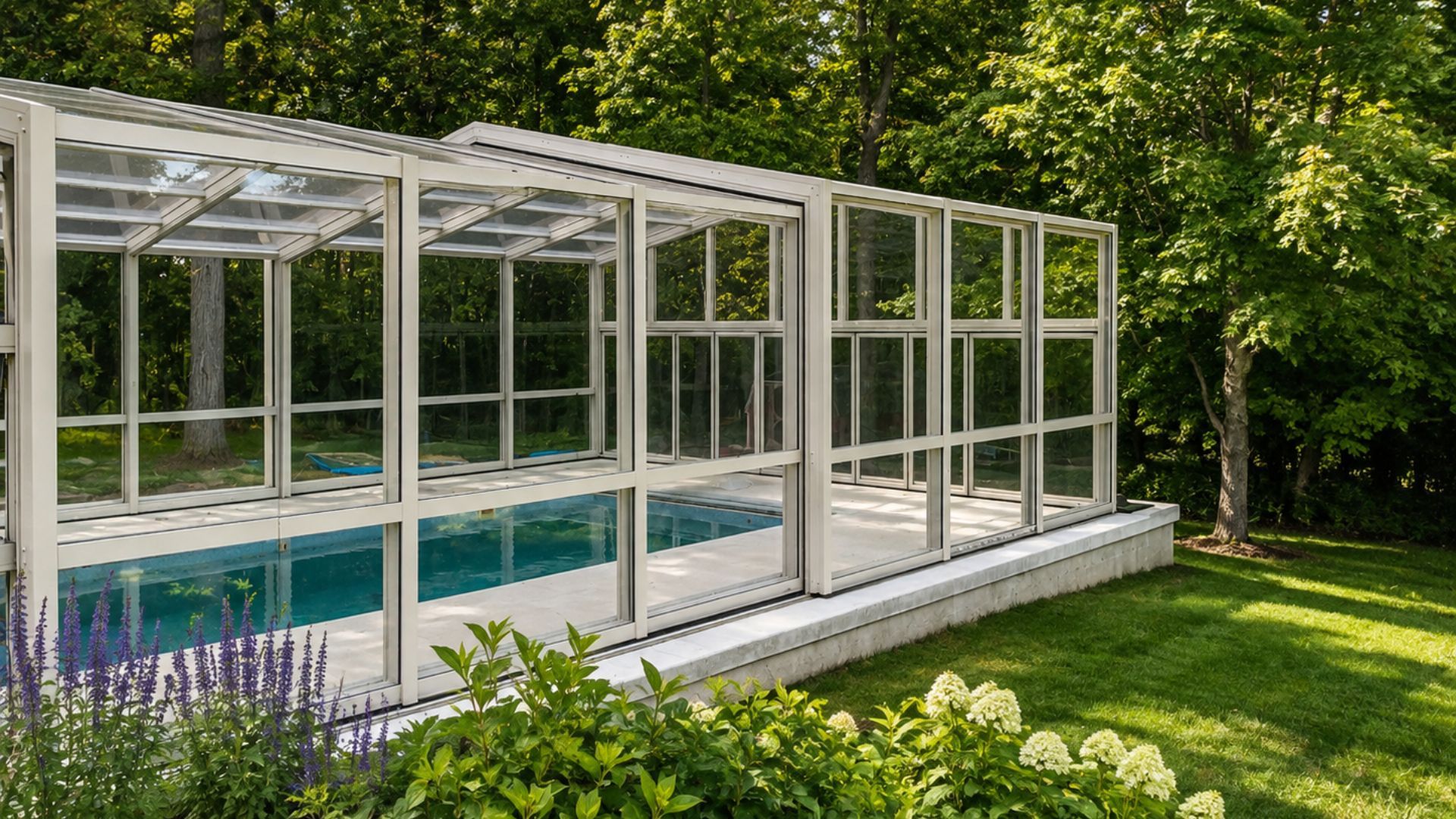
The framing of a pool enclosure is what gives it structural integrity. The glazing is what gives it character.
The panels that form the roof and walls of your enclosure determine how much natural light enters the space, how much privacy it provides, how warm it stays in winter, and how it looks from both inside and out. Choosing the wrong glazing materials can turn an otherwise excellent enclosure into a space that is too dark, too hot, too exposed, or too cold for comfortable year-round use.
This guide covers every major glazing option available for pool enclosures, explaining what each one offers and where it works best.
A pool enclosure has two distinct glazing zones with different functional requirements.
The roof panels — which bear the most structural load, receive the most sun exposure, and are responsible for most of the enclosure’s thermal performance — need to prioritize solar management, structural strength, and weather resistance.
The side wall panels — which are at eye level, affect views both inward and outward, and define the visual experience of being inside the enclosure — need to prioritize optical clarity, privacy, and aesthetic quality.
Most enclosures use different glazing materials in these two zones, which is entirely appropriate. The best choice for a roof panel is often not the best choice for a side wall.
This is the most common roof panel for residential pool enclosures and the baseline specification for most projects. A 10mm twin-wall polycarbonate panel consists of two structural faces separated by an air gap and internal web structure.
The air gap provides meaningful thermal insulation, and the panel’s weight is low enough to make large roof spans practical without additional intermediate supports. UV-blocking additives in the outer face prevent degradation from sun exposure and filter out most harmful ultraviolet radiation.
For most US climates and most residential applications, 10mm twin-wall polycarbonate is the appropriate roof panel choice.
For colder climates where thermal retention is a high priority, thicker twin-wall panels provide progressively better insulation values.
A 25mm five-wall polycarbonate panel provides roughly three times the thermal insulation of a standard 10mm twin-wall unit. For a heated pool in a cold climate, the energy savings from better-insulated roof panels can be meaningful over the life of the enclosure.
The trade-off is cost: thicker panels are more expensive per square foot, and they are heavier, which may require some framing adjustments for very large roof spans.
Tinted panels are available in bronze, grey, and opal finishes. They reduce solar heat gain in warm climates where overheating is a concern and provide a degree of visual privacy while still allowing comfortable natural light transmission inside.
For pool owners in high-sun regions like Florida, Texas, Arizona, or Southern California, tinted roofing panels are worth serious consideration. The reduction in solar heat gain can make the enclosed space significantly more comfortable during summer months.
Opaque insulated panels are used in specific zones — typically end walls — where privacy or thermal separation is more important than transparency. Some homeowners choose opaque end wall panels on the street-facing side of the enclosure for privacy reasons.
Clear acrylic is the standard side wall material for residential pool enclosures. It offers glass-like optical clarity, lightweight handling, and good resistance to the chemical environment around a swimming pool.
The view out through clear acrylic side panels is essentially unobstructed — you see the garden, the sky, and the surrounding landscape with minimal distortion. This is the experience most homeowners want and the reason clear acrylic remains the default choice.
For buyers who want premium optical quality and the aesthetic of a glass pavilion, tempered safety glass side panels provide a level of visual refinement that acrylic cannot fully match. The glass is sharper, clearer, and feels more architectural.
The trade-offs are weight and cost. Glass side panels are significantly heavier than acrylic, which affects framing requirements and installation complexity. They are also more expensive per square foot.
For high-end residential projects and commercial installations where visual quality is a top priority, glass side walls are worth the additional investment.
Tinted tempered glass is available in a range of finishes that reduce outward visibility from surrounding properties while maintaining clear inward views from inside the enclosure. This is a popular choice for urban and suburban properties where neighbor proximity makes privacy a concern.
For homeowners who want privacy without sacrificing natural light, frosted acrylic and privacy-film-applied panels offer a middle ground between clear and fully tinted glazing. These panels diffuse light rather than blocking it — the interior remains bright and comfortable while outward visibility from neighboring properties is significantly reduced.
This option is particularly popular for urban and suburban installations where the pool enclosure is in close proximity to neighboring fences or windows. It can be specified selectively — privacy panels on the boundary-facing walls, clear panels on the garden and house-facing walls — creating a space that feels open from inside while maintaining discretion from outside.
The glazing specification for your enclosure should be driven by three factors: your climate, your privacy requirements, and your aesthetic priorities.
In a cold northern climate, prioritize thick twin-wall polycarbonate roofing for thermal retention and clear acrylic or glass side walls for maximum solar gain during shorter winter days.
In a hot southern climate, prioritize tinted roof panels to manage solar heat gain and clear side panels that can be opened for ventilation. Covers in Play’s retractable pool enclosure systems incorporate operable windows and sliding doors that work in concert with glazing choices to manage the thermal environment precisely.
In a suburban setting where privacy matters, consider tinted or privacy glass side panels on the boundary-facing walls and clear panels on the house-facing and garden-facing walls.
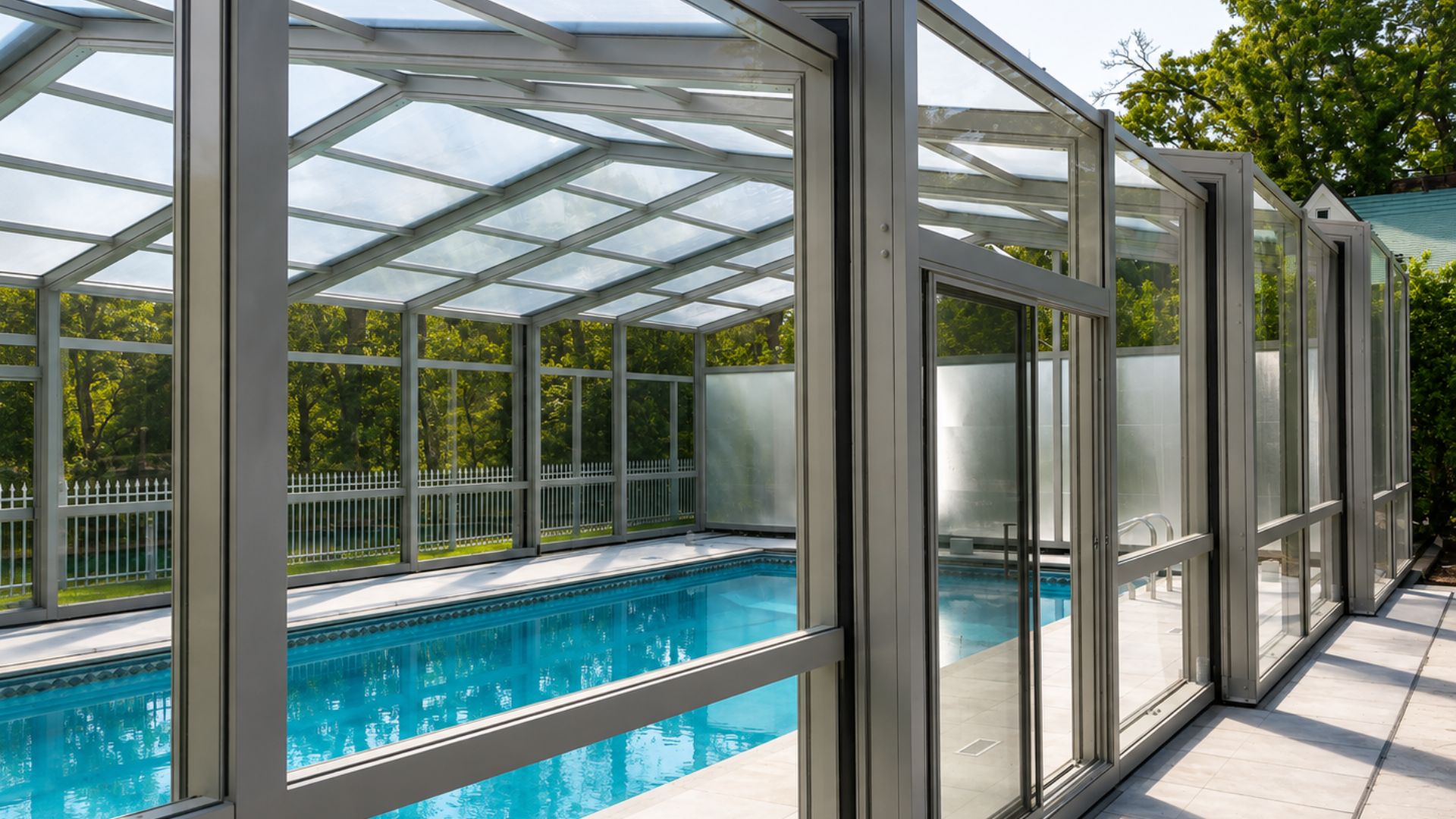
Glazing specification is one of the most nuanced decisions in the enclosure design process, and the right combination depends on factors specific to your site, climate, and lifestyle. During a free design consultation, the Covers in Play team will assess your property and produce a tailored glazing specification — one that balances thermal performance, light quality, and privacy for your specific situation.

 905-589-3000