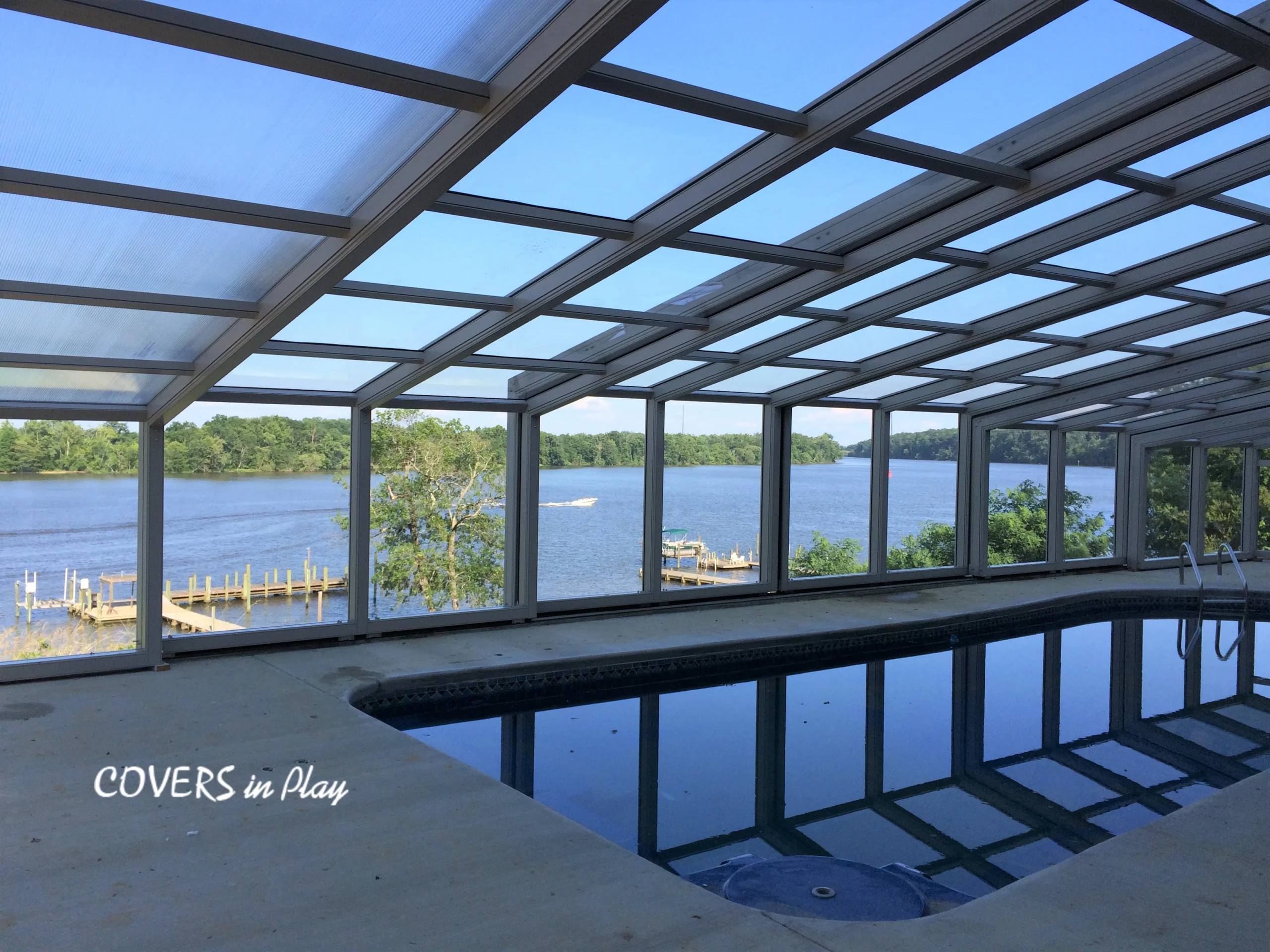
Are you paying the weather tax every week? Outdoor pools and patios bleed money in ways you can’t see—heat drifting off with evaporation (water turning to vapor), wind stripping comfort, and schedules blown up by rain. The U.S. Department of Energy notes evaporation is the dominant pool heat loss. Meanwhile, you’re juggling forecasts instead of serving guests or actually swimming. Three cold snaps in a week? That’s three reheat cycles and two cancelled programs.
Then the hidden line items hit. UV (sunlight) degrades finishes, storm debris jams filters, and staff spend extra hours skimming, vacuuming, and wrestling covers. Tuesday you heat to 82°F (28°C); by Thursday a gusty front cools it and you pay to reheat, again. A birthday party, a swim lesson block, a weekend package—gone to weather. We see this pattern from residential backyards to hotels with year‑round guests.
That’s why we don’t treat retractable enclosures as a luxury; they’re a control system that turns volatile weather into predictable performance and savings. In the next section, we’ll quantify five levers—Energy, Chemicals and Water, Maintenance and Asset Life, Revenue, and Labor—and show your payback. Want your numbers? We’ll send a custom ROI estimate within 48 hours, or share our calculator.
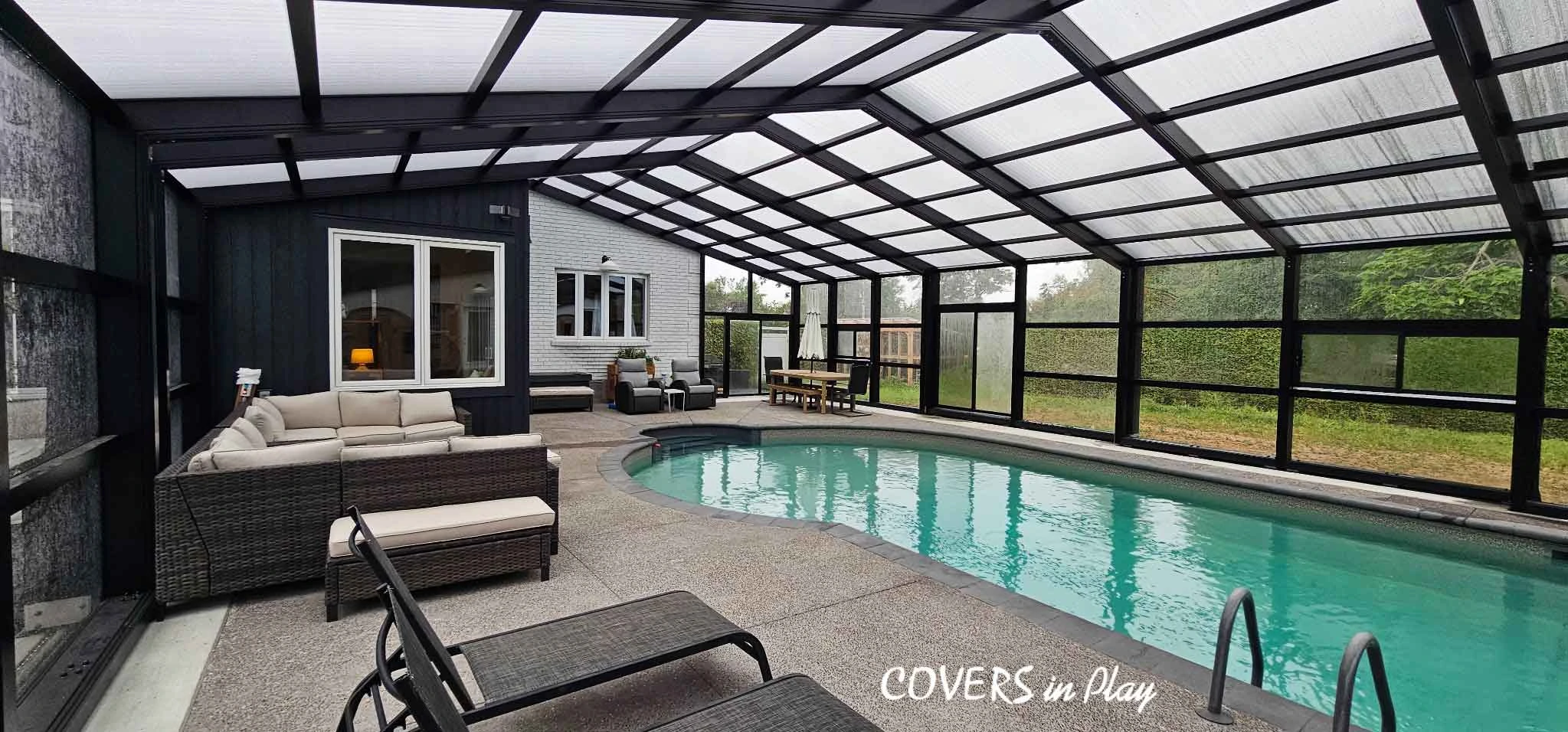
You asked for numbers—so what exactly is a retractable structure, and why does it change them? Think engineered, glazed panels that slide open or closed, forming an indoor-outdoor room on demand. That can be a pool enclosure, a dome, sliding walls, or a retractable roof. On blue-sky days, it’s open-air; when weather turns, you create a protected microclimate and keep operating.
We design these for residential pools, hotels, restaurants, community centers, and full aquatic facilities. Structures can be freestanding or lean-to, low or high profile, and integrate cleanly with decks and buildings. Frames are aluminum with corrosion-resistant hardware; glazing is polycarbonate (durable, insulated plastic) or glass. The result is flexibility: open when you want the sky, enclosed when you need reliability and ROI (return on investment).
What makes Covers in Play different is the ownership experience. Our patented automated drive system moves large spans smoothly and safely, so staff don’t push panels. We back it with a 20-year product warranty and include a complimentary design consultation (a $500 value) to de-risk decisions and optimize lifetime cost.
Before we map the five savings levers, let’s surface the hidden line items most budgets miss in outdoor spaces.
Most owners underestimate five cost buckets. Use this as a quick checkpoint against your current spend before you plan upgrades.
Picture a community pool: windy afternoons chill the water, storms dump debris, and staff scramble to reset. Lessons get moved, membership usage dips, and weekend events hinge on a forecast. Costs pile up while the calendar stays unpredictable.
You’ve probably tried the usual workarounds. Here’s why they add cost and risk without fixing the root issue.
You need adaptive protection—open on perfect days, sealed in minutes when it’s not—without extra labor or comfort trade-offs. Next, we’ll quantify the five savings levers so you can see the whole picture.
As promised, here are the five savings levers we model on every project. They consistently drive return on investment (ROI), though results vary by climate, usage, and build specifications. We’ll unpack each with formulas and examples—typical payback is 2–5 years.
We just previewed every lever—including labor and overhead—but the fastest physics win starts here: control heat loss. Retractable glazing (clear, insulated panels that open or close) blocks wind and slashes evaporation, the dominant pool heat loss per Department of Energy (DOE) guidance. With the enclosure closed, you trap a cushion of warmer, drier air over the water, so heaters run less. Sunny days add passive solar gains through the glazing, bumping water and air temperature without burning fuel. Result: stable temps and lower bills.
Notice what changes when wind goes quiet inside. Evaporation slows, surface heat stays put, and your heater stops short-cycling. The warm air buffer also lets heat pumps (electric heaters that move heat) operate in a friendlier range, especially in shoulder seasons. On bright days, crack panels for fresh air while still capturing solar warmth. That flexibility—open when perfect, closed when not—stabilizes energy costs and your schedule. Bonus: reduced evaporation means fewer chemical losses and top‑ups, which we’ll quantify next.
Planning a patio or mixed‑use courtyard? The same physics apply—consider a modern retractable roof to cut wind, bank solar warmth, and protect comfort on demand.
Quick wins to maximize energy savings from day one:
Dialing in glazing and seals doesn’t just cut heat loss; it steadies your water chemistry. With the enclosure closed, evaporation and debris drop, so chlorine holds longer and pH (acidity) drifts less. You also top up less water, and adjacent indoor areas breathe easier thanks to reduced off-gassing and splash-out.
In our projects, a 20×40 pool under a retractable enclosure often trims 20–35% sanitizer use and 25–50% water top-ups in windy months. Less UV (sunlight) and wind mean fewer shock events and steadier combined chlorine (odor-causing byproducts). Result: clearer water, fewer complaints, and filters that can run shorter cycles.
For year-round swimming comfort and tighter water balance, explore our retractable pool dome enclosures—open-air when you want it, protected microclimate when you need it.
Lock in these gains with a few simple practices that stabilize chemistry and reduce refills. Next, we’ll protect assets and cut repairs.
You’ve recalibrated feeders and ORP (oxidation‑reduction potential, sanitizer strength) and pH—now that steadier water stops attacking surfaces, the enclosure protects everything else. Tired of replacing cushions? By blocking UV (ultraviolet) light, wind, snow, and debris, it slows fading, chalking, and cracking on liners, plaster, coping, and decking. Furniture doesn’t bleach as fast, fasteners corrode slower, and sealants last longer. Reduce freeze–thaw shocks and you cut hairline fractures and popped tiles. Planned care replaces emergency repairs. That’s relief you can budget.
In practice, we see replacement cycles stretch by years: cushions and loungers go from two seasons to five, and deck coatings extend 3–6 years. Defer one $18–25k resurfacing by four years and you’ve banked roughly $4.5–6k per year. Pumps, heaters, and controllers fail less because electronics aren’t soaked or sandblasted. Winterization often shrinks to a checklist in many climates. Our patented automated drive reduces strain on panels and seals, and our 20‑year warranty backs ownership. Protected assets mean fewer closures—and more revenue days.
For dining spaces, well-designed patio enclosures preserve tables, cushions, lighting, and decking—no more hauling gear before every storm.
Lock these gains in with a simple preventative routine—15 minutes a month protects decades of service.
You’re already logging quick fixes—that protection does more than cut costs; it unlocks bookings. Empty chairs on rainy Saturdays? Painful. Extend your season, guarantee the reservation experience, and price for comfort when others close. We see restaurants keep patios open through drizzle, hotels sell all‑season pool packages without blackout dates, and community pools run lessons when wind would normally shut you down. That reliability translates into higher occupancy, steadier membership retention, and upsell moments that used to vanish with the forecast.
Want practical paths you can launch fast? Add private events year‑round, resume off‑season programs, and bundle comfort perks—towel service, warm‑air lounges, and photo‑friendly spaces. We see resorts host fitness classes and family nights regardless of weather; municipalities keep therapy, lap swim, and camps rolling straight through the calendar. Homeowners who rent occasionally can attract shoulder‑season stays. And because setup is simpler and cancellations drop, your team spends fewer hours resetting—perfect lead‑in to labor and overhead savings next.
Weatherproof patios seat more guests consistently; explore our restaurant patio enclosures to keep service full in shoulder seasons.
Operators monetize flexibility in simple, repeatable ways—each benefits from fewer cancellations and smoother operations. Start with these.
Market a comfort guarantee and bookings feel risk‑free—now make operations feel that way for your team. Our automated drive closes or opens the enclosure in seconds per bay, so daily setup, wind checks, and tarp wrestling disappear. You stop chasing storms, issuing refunds, and rebooking classes. Most sites cut 6–15 staff hours a week in season, mainly from fewer cleanups and no emergency responses. Schedules stabilize, phones quiet down, and managers plan by calendar, not radar. Relief you can measure.
Concrete example: if setup and takedown take 20 minutes twice daily, automation gives you back 4.5 hours a week. Add 30 minutes saved after each windy front—five events a month is another 2.5 hours. Cover handling becomes a button press, not a two‑person lift, reducing strain injuries and workers’ comp risk. Chemistry stays steadier inside, so checks move to planned intervals, not panic tests. Vendor callouts drop because pumps and electrics aren’t exposed to driving rain.
Running a campus or resort? Our commercial retractable enclosures centralize control, standardize procedures, and scale automation across multiple pools and patios.
Grab these quick wins now, then we’ll roll your time savings into the ROI model next.
You just batched vacuuming and checks during off‑hours—now plug those hours into the model. The table shows where savings appear; numbers are placeholders. Use defensible ranges and cite DOE, PHTA, and weather normal. Next, we’ll show quick snapshots.
| Category | Baseline Annual Impact | With Retractable Structure | Where Savings Come From | Notes |
|---|---|---|---|---|
| Energy | High heating loss; frequent heater cycling and shoulder-season inefficiency | Stabilized air and water temperatures with reduced wind exposure | Lower evaporation and captured solar gain reduce heater runtime | Use DOE guidance (U.S. Department of Energy) on pool heating and evaporation |
| Chemicals and Water | Frequent top-ups, higher dosing from UV (ultraviolet) and debris | Lower evaporation, less UV exposure, reduced drift | Cleaner environment and stable balance reduce sanitizer and acid demand | Reference PHTA/APSP standards (Pool & Hot Tub Alliance) and monitoring protocols |
| Maintenance and Repairs | Weather wear, corrosion, and frequent reactive fixes | Slower wear and fewer emergency repairs; longer replacement cycles | Barrier to UV, wind, snow, and debris protects finishes and equipment | Track life-cycle extension and deferred capital replacements |
| Revenue | Weather cancellations and idle capacity limit sellable days | More sellable days, seats, and programs across seasons | Fewer closures plus premium comfort support higher utilization and pricing | Document utilization gains and season extension; attribute price uplifts |
| Labor and Overhead | Daily set/strike, weather monitoring, and post-storm cleanups | Automated operation with fewer disruptions and emergency resets | Standard operating procedures and fewer refunds or calls | Note training needs and SOP impact (standard operating procedures) on staffing |
Book a complimentary design consultation ($500 value) and receive a custom ROI estimate within 48 hours.
Our automated drive and 20-year warranty ensure long-term savings confidence.
You just saw the ROI model—so what does it look like in practice? Three quick snapshots across home, hospitality, and community to help you picture the outcome.
Aquatics Center: Storm closures near zero; therapy and lessons stay on schedule; membership churn -15%; programs add $210k/year with commercial pool enclosures enabling year‑round operations.
Those near‑zero closures and year‑round programs start with the right fit. Which configuration matches your space? Fit depends on use, climate zone, local codes, and how open you want it to feel. Share a few photos with our engineering team early; we’ll flag constraints and show two to three viable options. Next, we’ll map the process and timeline.
Use this quick checklist to narrow options; we’ll confirm details in a short design consult.
Note: We already linked to patio enclosures above, so we’ll skip repeating that link here to avoid duplication. Flag casual outdoor living during your consult and we’ll tailor recommendations.
You flagged casual outdoor living during your consult—now here’s the step‑by‑step path from sketch to first swim. It’s structured, predictable, and fast, with typical timelines noted so you can plan staffing and revenue.
Book your complimentary consultation ($500 value) and receive a 48-hour custom ROI preview.
Our automated drive and 20-year warranty ensure lasting confidence.
Before you book your 48‑hour ROI preview and free design consult, you likely have quick questions on cost, codes, comfort, and care. Here are clear, no‑nonsense answers.
You asked what it costs—now let’s map it to your savings. We’ll quantify the five levers—energy, chemicals and water, maintenance and asset life, revenue, and labor—and deliver a tailored ROI plan in 48 hours. Our patented automated drive keeps daily operation simple, and our 20‑year warranty backs long‑term performance. Book your complimentary design consultation (a $500 value) and see your payback window.

 905-589-3000