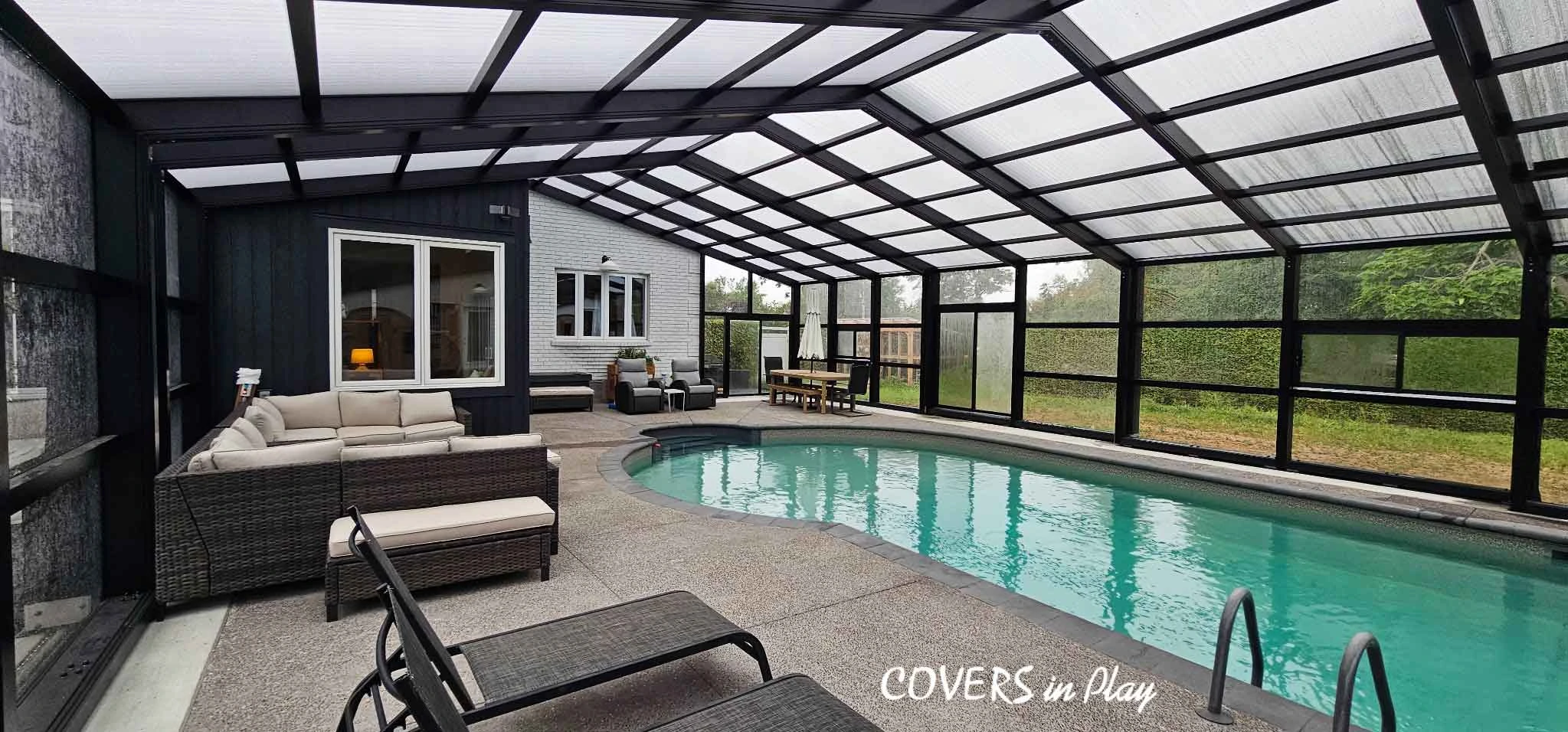
Every fall, you stare at the cover kit, extra chemicals, and a heater battling 45°F nights, wondering if it’s worth closing now. We hear it weekly. The visible costs add up; the hidden ones sting more—lost weekends, debris cycles, spring re‑opening hassles. What if extending your season six to ten weeks actually lowered heat loss and stabilized water chemistry? We’ll show you the math.
A pattern we see: a family decides to keep swimming through October, then watches the first snow from under clear panels. Our patented automated drive opens with a button; our 20‑year warranty keeps it simple for decades. You could add 60–90 swim days and skip leaf‑storm cleanups. Want a quick ROI (return on investment) snapshot for your pool? Our complimentary design consult runs the numbers.
To decide wisely, start with shared definitions—and the seven buying facts that separate a sanctuary from a headache.
So those shared definitions you need before the seven facts? Here they are. A retractable enclosure is a rigid, engineered shell that slides open or closed over your pool telescoping sections on tracks. Core parts: structure (aluminum frame), tracks, glazing (polycarbonate or glass), seals, drive/operation (manual or motorized), and ventilation.
It’s not a greenhouse or backyard tent; it’s built to code for snow, wind, and daily use. Expect rigid panels, weather seals, and lockable doors not flapping fabric. Retractable shines for shoulder seasons, snow or wind protection, and clear views. Choose form: low-profile for lap pools, high-profile for headroom, lean-to off the house, or freestanding when space allows.
Bottom line: you gain 60–90 extra swim days in cool climates, or year‑round with heat, while cutting heat loss. The enclosure blocks debris, so filters run easier and water stays stable. Doors and locks add a safety barrier. Conditions—temperature and humidity—become predictable.
Want a deeper primer? Explore our pool enclosure guide, then we’ll run the numbers next to see if it pays off.
So does it pay off? Let’s run the numbers at a high level. Closing and reopening pile on labor (blowing lines, winterizing, restarting), chemicals and rebalancing, cover wear, and heavy debris cleanup. Operating under an enclosure shifts costs: you moderate heating because wind and evaporation drop, chemicals stay stable, and maintenance becomes routine instead of seasonal surges. The exact mix changes with climate, pool size, and how often you swim—and that’s where value shows up.
Example: In a windy, cold climate, fall closings mean contractor time, winter chemicals, safety cover handling, and a big spring clean. Under an enclosure, you trade those spikes for steady tasks: skimming less, filters working easier, and milder heat input. In milder zones, the gain is extended evenings and fewer storm cleanups. Commercial pools replace lost rainy‑day revenue with booked lessons. Your pattern sits somewhere on that spectrum—our consult maps it quickly.
You focus on the pretty photos and a low quote, expecting simple setup. Then winter hits and you learn the structure wasn’t engineered for your snow or wind, tracks bind, and manual sections take two adults to move. Condensation fogs panels, water drips on decks, and your permit stalls because drawings were generic. We get why it happens—you’re busy and vendors oversimplify. Those early misses show up right when you want to swim.
Common example: you choose a bargain, manual‑only unit for a breezy hilltop. By January, grit and ice in the tracks make opening a workout, so you stop using it. Heating climbs because gaps leak air; chemicals drift as humidity spikes; inspectors ask for anchorage details you don’t have. The season you meant to extend shrinks. Now you’re scheduling service calls and rework you thought you’d avoided.
Use this quick checklist to dodge the usual regrets before you sign.
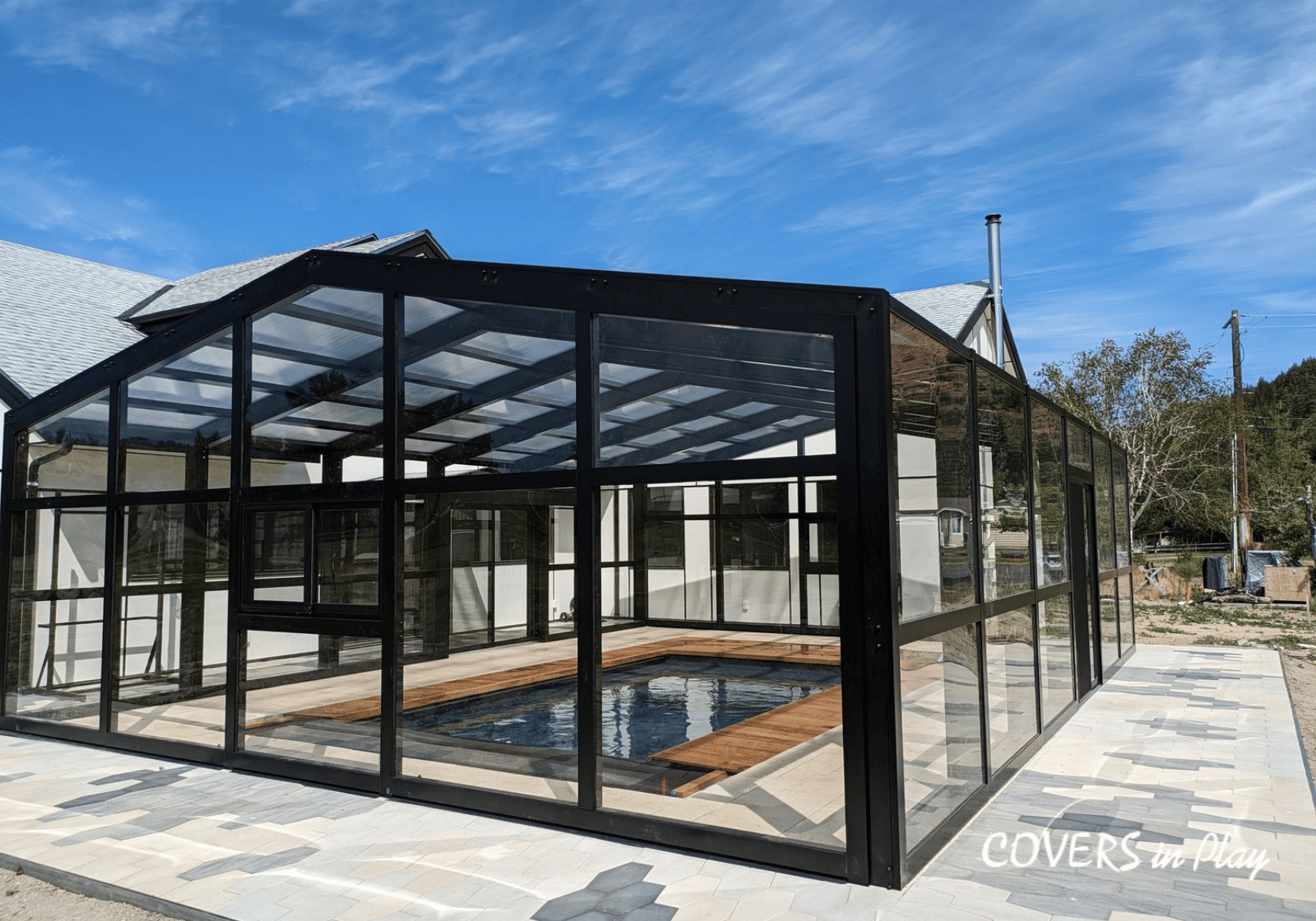
When specs miss your climate, tracks collect grit and ice, sections rack slightly, and movement binds. Binding creates gaps; gaps invite leaks that soak edges and corrode fasteners. Humid, chlorinated air condenses on cool surfaces, dripping back onto decks. Heating works harder because infiltration steals warmth. Result: fewer easy open‑close days and fewer actual swims.
Then costs compound. Service calls treat symptoms; chemicals rise chasing unstable water; energy creeps as heaters fight drafts. Staff time balloons for commercial pools, and families stop opening on weeknights. The enclosure meant to extend your season now shortens it, while you plan retrofits you could have specified upfront.
You can avoid that spiral. Use a simple seven‑fact framework to protect seasons, comfort, and budget—starting with structure, then glazing, operation, and more.

Here’s that seven‑fact framework we mentioned. Ready to stop guessing? Score each vendor 1–5 to expose trade‑offs and risk. We’ll unpack each next, starting with structure.
You saw the seven facts, let’s start with Fact 1: structure, because safety and longevity live here. What turns “looks sturdy” into engineered safety? Codes like IBC/IRC (national building code) and your site’s exposure (how open your yard is to wind) turn into numbers: snow in psf (pounds per square foot), wind in mph (miles per hour). Those numbers size frames, set track foundations, and define anchors below frost depth. Your role: ask for stamped calcs (licensed engineer’s calculations), site‑specific drawings, and anchorage details—bolt type, spacing, embed, footing size. We deliver those for permitting and construction.
Simple example: your county lists 40 psf ground snow and 115‑mph 3‑second gust (the wind speed used for design). Open terrain (Exposure C—few trees or buildings) pushes lateral loads higher than a sheltered lot. Result: we upsize arches, choose heavier base plates, and specify 42‑inch frost‑depth footings with stainless wedge anchors at 24 inches on center. Tracks get drainage so meltwater doesn’t freeze and jack sections. With structure set, next we choose the “skin”: glazing and insulation.
| Material | Strength-to-Weight | Corrosion Resistance | Maintenance | Notes |
| Aluminum | High | Excellent with proper finish | Low | Popular for coastal/corrosive environments |
| Galvanized/Coated Steel | Very high | Good with coatings | Medium | Heavier; great for large spans |
| Engineered Wood/Hybrid | Moderate | Varies by species and finish | Medium-High | Warm aesthetics; needs careful detailing |
Warm aesthetics need careful detailing—glazing is that detail. Multiwall polycarbonate (hollow sheets that trap air) delivers higher R‑values around R‑2 to R‑4 (better insulation), diffused light, and outstanding impact resistance. Solid polycarbonate looks glass‑clear with similar toughness, but less insulation. Tempered/laminated glass gives crystal views and excellent UV stability, with lower thermal performance (lower R, higher U means more heat loss). Which suits you?
| Glazing Option | Thermal (R/U) | Clarity | Impact Resistance | UV/Yellowing | Best Use |
| Multiwall polycarbonate | Good (higher R-value; lower U) | Diffused | Excellent | Stable (quality dependent) | Cold climates; energy focus |
| Solid polycarbonate | Fair | High clarity | Excellent | Good | Panoramic views; higher weight |
| Tempered/laminated glass | Fair–Good (low R) | Crystal clear | Good | Excellent | Premium look; moderate climates; heavier structure |
Buyer tip: Use diffused multiwall on the roof to cut glare and heat gain, and clear solid sidewalls for views, daylight, and lifeguard sightlines.
That glazing tip matters for movement too: heavier panels demand smoother tracks and a balanced drive. You can operate three ways: manual (you push), assisted (handle‑plus‑rollers), or automated (motorized, synchronized). Reliability starts at the ground: precision‑aligned tracks with built‑in drainage shed grit and meltwater so wheels don’t bind. Seals—compressible gaskets at joints and thresholds—keep air and spray out, so you’re not fighting suction or leaks. We design for everyday use in real weather: a 30‑second open/close per bay, even after a windy, pine‑needle day.
Be honest: if it takes two adults to move, you won’t open it on weeknights. That’s why we favor automation for most medium and large spans. Our systems use synchronized drives with soft‑start/stop, sealed bearings, and safety interlocks (switches that cut power if anything blocks travel). Drains and brush seals clear sand and light ice; a manual override keeps you covered during outages. Typical routine? Tap the remote, panels glide, doors latch, you swim. With operation handled, comfort is next—fresh air and humidity control make the space feel great.
Our patented automated drive synchronizes sections, resists misalignment, and handles debris with built‑in drainage. Push‑button consistency means you actually use the enclosure daily, preventing wear from forced moves and avoiding service calls. That protects your energy savings, water chemistry, and the structure—season after season.
That push‑button consistency protects energy and water chemistry; now let’s make the air feel just as good. How do you keep windows clear and the space fresh without wasting heat? Our goals are simple: manage condensation, prevent chloramine odors (that “pool smell”), protect nearby structures from moisture, and keep swim conditions comfortable across seasons. We target 82–86°F air, water about 2°F cooler, and 50–60% relative humidity.
| Driver | What It Affects | How Enclosure Helps | What to Specify |
| Evaporation | Heat loss, humidity | Cuts evaporation 50–70%, stabilizing heat and humidity | Tight seals; balanced vent strategy |
| Air Temperature Delta | Heater load | Moderates temperature swings by 5–10°F | Glazing R‑value; night insulation |
| Solar Gain | Overheating risk | Diffuses harsh sun; venting lowers peaks 10–15°F | Diffused roof; operable panels |
| Infiltration/Wind | Comfort, heat loss | Windbreak and buffer reduce drafts at deck level | Perimeter sealing; vestibules |
With perimeter sealing and vestibules planned, now we move from comfort to compliance. Most projects pass three gates: zoning (setbacks and height), a building permit under IBC/IRC (International Building Code/International Residential Code), and HOA/ARC (homeowners’ association/architectural review) if applicable. Meanwhile we design foundations (frost‑depth footings or a reinforced slab), drainage that sheds water away, and safe routes for power and gas. To speed this up, gather a site plan, pool dimensions, equipment photos, and a few wide shots of the yard. We package these into stamped, site‑specific drawings for submittal.
Timing varies by city, but plan on 1–3 weeks for zoning, 2–8 weeks for building permits, and 1–4 weeks for HOA. Foundations typically go below frost (36–48 inches in cold zones) and are isolated from the pool deck with control joints. We specify slab thickness, rebar, anchor layout, and a 1–2% grade to drains; on tight sites we add a trench or French drain. Utilities are coordinated early: a dedicated 240‑V circuit, gas line sized to heater BTU, and low‑voltage runs. With approvals mapped, let’s make it beautiful—design and fit.
With approvals in hand, let’s make it beautiful—design and fit that respect your HOA and your view. Height sets the mood: lean‑to eaves at 9–11 ft feel connected; freestanding ridges at 14–18 ft create a room. Spans typically run 16–38 ft; we size to snow/wind and the look you want. End‑walls can be full‑glass gables for panoramas or solid kneewalls for privacy. Doors? Sliding for low thresholds, swing for quick egress. Tracks stack one‑side to save patio, or both‑sides to shorten panels.
Flow is what makes you love it nightly. Put primary doors by steps and the shallow end; add a service door on the equipment path. Keep 36 in clear walkways around ladders, benches, and a cover roller zone. For accessibility, plan ADA (Americans with Disabilities Act, accessibility rules)‑friendly thresholds and turning space. On a 32‑ft span, both‑side tracks create lighter bays; one‑side stacks keep a party deck open. Tie into patios with flush transitions and snow‑shedding drip edges to keep entries dry.
Those drainage details—1–2% slab pitch and tracks away from downspouts—only pay off if the maker stands behind the system long term. Read the warranty for duration and specifics: structure/coatings, glazing against yellowing, drive motors/gears, seals and hardware—plus exclusions (consumables, misuse, extreme events). Confirm parts vs. labor coverage and transferability to a new owner. Ask how claims are handled and how fast. As a benchmark, our 20‑year product warranty signals decade‑long support. Quick test: if a motor fails in year 9, do you get parts only, or labor as well?
Now, vet the vendor like you’d vet a roof. Ask for: a sample warranty, a written parts‑stock commitment (glazing profiles, drive components, seals stocked 10+ years), and a service map with response targets (48‑hour remote, 7–10 days on‑site). Get three recent references in your climate and wind/snow zone. Confirm who installs—factory crew or certified partner—and that you’ll receive an O&M manual (operation and maintenance), serial numbers, and a one‑page warranty transfer form. With confidence locked, let’s tailor priorities by use: residential comfort vs. commercial uptime.
With confidence locked on warranty and service, priorities shift by use. At home, you want easy nightly operation, low maintenance, and warmth without glare. Privacy matters; noise doesn’t. Two to six swimmers, mostly evenings, means simple access and quick wipe-downs. Commercial changes everything: Americans with Disabilities Act (ADA) access, lifeguard sightlines across lanes, higher bather loads (40–150/day), health-code inspections, and uptime targets (SLA, service-level agreement). Tracks, doors, and layouts need to stay open and safe all day. Different goals. Different specs.
What does that mean in practice? Residential: a 16×32 ft backyard pool, four swimmers, wants a quiet, automated open in under 30 seconds and 10‑minute weekly cleaning. Diffused roof, clear sides, and a low threshold by the steps keep life simple. Commercial: a 6‑lane facility targets 99% uptime and fast turnovers. We specify wide egress doors, clear panels for lifeguard sightlines, and floor drains for nightly hose‑down. Health inspectors visit monthly; managers want parts on hand and a 48‑hour service commitment.
If you run a facility, start with our commercial pool enclosures, then jump to enclosure types next.
You just moved from priorities to types—so which form fits your home or facility? Segmented telescopic enclosures are multiple rigid bays on tracks; you slide sections to open a zone or fully stack. We like them for everyday control and for angling roofs to shed snow. Full domes (rigid, not inflatables) balance wind from all sides and create one large interior volume, but add height and presence. Hybrids mix forms—like a lean‑to joined to a higher arch—so tight sites keep views and headroom.
Now, how do you choose fast without regret? Rule of thumb: wind wants lower profiles, snow wants steeper roofs, people volume wants taller interiors. Example: a breezy hilltop with 30–40 mph gusts favors a low‑profile telescopic that tucks under 9–10 ft. If ground snow is 40–60 psf (pounds per square foot), go steeper: high‑profile segments or a rigid dome to encourage sliding. Running lessons? Target 14–18 ft clear height so lifeguards see across lanes and humidity stays above head level.
If you love the sculptural look and 360° views, explore our retractable pool dome enclosures. Then we’ll plan the spaces around your pool—patios, lounges, and transitions that make it a destination.
Let’s plan the spaces around your pool—patios, lounges, and transitions—so it becomes a destination. When we tie the enclosure to your dining terrace, you gain real, usable square footage every month. Sliding end walls line up with your table; flush, low‑profile thresholds keep chairs rolling. Wind and rain turn into background noise: panels act as a windbreak, blocking 15–25 mph gusts and shedding showers, so dinner continues. Stack sections to uncover the grill zone, while clear sides preserve yard views. Easy hosting.
Now think season by season. In July, slide two bays open to create a breezeway and keep smoke drifting out. In April and October, close the roof and crack leeward windows for a 5–10°F warmer deck. In December, keep walls closed, add a covered path to the spa, and use drip edges to keep entries dry. We often add a 3–4 ft transition strip so wet feet don’t track inside. No room for walls? A roof‑only system may be perfect—next up.
Want the full picture? Explore our patio enclosures to see layouts that connect dining, lounging, and pool zones seamlessly.
Just toured those patio layouts? Sometimes walls aren’t needed—the roof does the work. Roof‑only systems shine over courtyards or atriums (open spaces ringed by walls) where you already have wind protection. We span the opening, tie into structural beams, and pitch the roof 1.5–2% to hidden gutters. Drains and scuppers (outlets that move water off the roof) prevent ponding. In snow country, we design for drift at building edges and add flashing (shaped metal that seals joints) to keep tie‑ins watertight.
How to choose? Full enclosures deliver maximum climate control, privacy, and winterization—perfect for freestanding pools or exposed decks. A roof‑only preserves open walls, views, and airflow, often trimming cost 20–35% and keeping patios lively. Trade‑offs: less heat retention, occasional wind‑blown rain, and insects unless you add screens. We automate with rain and wind sensors that auto‑close around 20–25 mph, plus manual overrides. If footprint or sightlines matter most, roof‑only is the sweet spot.
Explore our retractable roof options, then we’ll walk through a quick real‑world scenario next.
As promised, here’s that real‑world scenario. A 16×32 ft backyard pool in a mixed climate (40 psf snow, 115‑mph gusts) gets a freestanding telescopic aluminum frame on 42‑in frost‑depth footings. We specify diffused multiwall roof panels for insulation, clear solid polycarbonate sides for views, and our automated drive for 30‑second opens per bay. Venting targets 3–4 ACH (air changes per hour) with leeward windows and a small dehumidifier. Permits follow the IRC (International Residential Code) with stamped drawings. Doors align to the dining patio; low thresholds keep carts rolling. Warranty? 20 years, parts supported.
Now, a commercial flip side. A 6‑lane community pool (70×100 ft) in a windy zone opts for a high‑profile segmented enclosure engineered to 120‑mph winds and 50 psf snow, anchored to a reinforced slab. Glazing mixes diffused roof and clear sides for lifeguard sightlines. We automate with synchronized drives and safety interlocks; egress doors meet ADA (Americans with Disabilities Act) widths. Ventilation targets 6–8 ACH (air changes per hour) with source‑capture at the waterline. Permitting runs under IBC (International Building Code). Outcome: +110 days, 18–25% lower heating energy, fewer closures, and weeknight lessons that stick. Next: the steps.
You saw those scenarios pay off—ready to move? Follow this sequence we use on projects. Most go from consult to install in 10–16 weeks; we’ll tackle FAQs (frequently asked questions) next.
Directional ranges only: residential telescopic enclosures typically land around $45k–$180k; roof‑only systems $25k–$120k; commercial spans $200k–$800k+. Drivers are structure (snow/wind loads and span), glazing (multiwall vs. solid vs. glass), size and height, automation, and sitework (footings, slab, drainage, electrical). Complex access or coastal coatings add cost. Want a precise number for your pool and climate? Our complimentary consult produces a concept sketch and line‑item estimate.
Yes—when it’s engineered to your site. We submit stamped calculations (licensed engineer’s math), list your exposure category (open terrain vs. sheltered), and design anchors and footings below frost depth. Loads follow your jurisdiction’s adopted code, typically the International Building Code/International Residential Code. Building officials review drawings before work begins. Ask for bolt specs, spacing, and footing sizes on the plans—compliance lives in those details.
We plan ventilation first (3–6 air changes per hour, operable windows, dehumidifier as needed) to keep glass clear and chloramines low. Structures use powder‑coated, marine‑grade aluminum, sealed profiles, and 304/316 stainless fasteners; we separate steel from splash zones and salt cells. Good drainage and thermal breaks limit condensation. For details, see the ventilation and humidity section above.
Manual works on small, light spans. But when sections are heavy, people open less often, tug harder, and wear wheels and seals. Automation fixes that: synchronized drives, soft start/stop, safety interlocks, brush seals, drainage, and a manual override for outages. Clients tell us automation turns weeknights into swim nights—consistent use, less strain, fewer service calls, and mechanisms that stay aligned season after season.
Book a complimentary design consultation (a $500 value) and get a concept sketch, budget, and ROI snapshot. You’ll see how our patented automated drive and 20‑year warranty fit your site, climate, and goals—no pressure, just clear options and real numbers.
Book Your Complimentary Design Consult — Opens Scheduling Form

 905-589-3000