
You bought your compact current (swim‑jet) pool to swim more, not to babysit test strips. The promise is year‑round laps in a small, efficient footprint. The reality? Precise hydraulics (the pump and jet flow), heaters, covers, and tight equipment bays mean tiny hiccups can snowball—pH drifts after a 40‑minute workout, filters clog fast, temps swing overnight. Good news: upkeep isn’t a mystery. It’s a simple system you can master.
Most owners tell us the same story: a great session, then surprise cloudiness, a service call, and lost swim time. Sound familiar? We’ve boiled the chaos into three clear paths—15‑minute DIY (do‑it‑yourself) checks, a pro brief (clear instructions for your technician) that actually works for current pools, and one smart upgrade that removes most variables. We’ll show you the scripts, checklists, and settings we use. Want the quick win? Grab our enclosed‑pool maintenance checklist or book a five‑minute consult.
Here’s the twist: the real win isn’t just fixing issues—it’s designing them out so they show up far less. Next, why compact/current pools feel high‑maintenance and how to flip that script.
We said the win is designing problems out—so why do compact/current pools feel high‑maintenance? Because each subsystem runs on tight tolerances: current/hydraulics (the swim‑jet and pump), filtration, the heater, the GFCI (ground‑fault circuit interrupter), the cover, and water chemistry. In a small volume used daily, tiny mistakes get expensive fast. Miss a filter rinse and back pressure climbs, flow drops, and the heater may lock out. After a hard session, aeration nudges pH up and sanitizer works less. More use, less margin.
Everything talks to everything. A slightly clogged cartridge forces higher pump speed, which stirs more micro‑debris and traps air at a loose union; now you get bubbles, weak current, and noise. Humidity from frequent heating condenses in tight bays, irritating electrical parts and triggering phantom trips. One heavy shock (oxidizer) without venting creates chloramine odor and can pit nearby metal. Small causes, fast cascades. That’s why staying ahead matters.
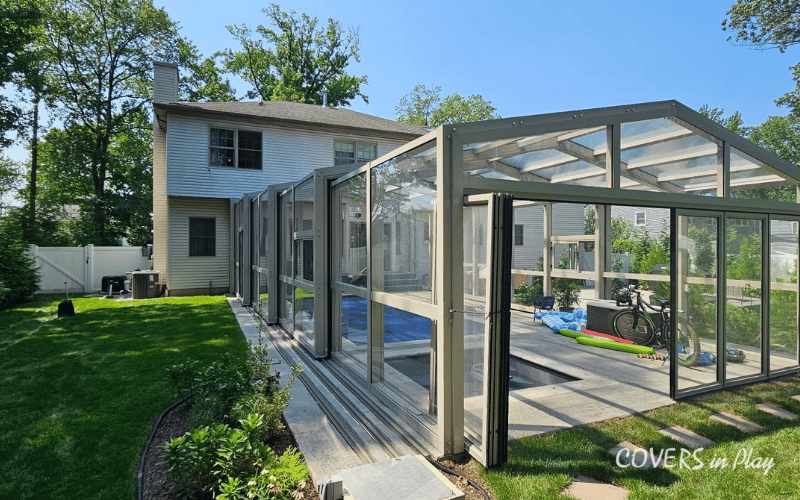
Stability beats heroics. When you control the environment—less wind, debris, UV, and humidity spikes—everything settles down. Our swimming pool retractable enclosures
do exactly that: fewer variables, steadier chemistry, calmer equipment. It’s the easiest lever to pull.
Compact systems reward consistency: clean flow, balanced chemistry, and protected equipment.
You clean, you swim, then something odd: weak current, bubbles in the pump basket, or a heater that fires, stops, fires again. After a 30‑minute current session, pH creeps up and water looks dull by morning. The skimmer fills twice as fast on windy days. And the worst part? Intermittent faults. The low‑flow light blinks only when you’re mid‑workout. The safety outlet trips once a week and then behaves when the tech arrives. You’re reacting, not swimming.
Then the hidden stuff stacks up. Micro‑debris rinses back into the pool on a rushed filter clean, so cloudiness returns two days later. Condensation in tight equipment bays wicks into connectors, creating nuisance trips and rust halos on screws. A cover that binds slightly chews its edges, and misalignment becomes a tear. Chemistry swings—too little sanitizer or high pH—invite biofilm and scale, which elevate heater temps and energy use. Waiting “to see” turns small fixes into big bills.
Debris and chemistry swings don’t just steal clarity; they damage hardware. Every extra leaf boosts filter pressure, cuts flow, and makes heaters short‑cycle (on/off rapidly), stressing igniters and sensors. Humidity and condensation in tight bays corrode screws, boards, and relays; a small drip becomes a soggy insulation mess. In the water, evaporation carries heat away fastest, and wind accelerates it—so temperatures yo‑yo and costs climb. Add one slow leak in a compact bay and you’re mopping floors, not swimming.
Reacting late means downtime. Owners tell us a single heater lockout can sideline swims for 2–5 days while parts arrive. Run low flow for a month and you may shave a season off a pump seal. Chronic humidity can age electronics years early. Meanwhile, the routine stretches: 60–90 minutes a week on test–dose–clean cycles, plus unexpected service calls each quarter. That’s not just money—it’s lost training time. Preventing swings preserves both weekends and equipment life.
So how do you stop the spiral? Control the environment and simplify access. With stronger barriers to wind and debris, planned venting, and secure service entry, routines get predictable. Explore our retractable pool enclosure features
to see how ventilation, automation, and locking options reduce variables before they become repairs.
Stronger barriers, planned venting, and secure access reduce variables—now let’s turn that stability into a simple, three‑path routine you can run. Path A: DIY First Aid and monitoring for quick wins. Path B: guided local help (handyman, electrician, plumber) using photos and a one‑page brief. Path C: licensed pool, HVAC (heating, ventilation, and air conditioning), and electrical pros for high‑risk or warranty work. Example: after hard swims, test pH within 30 minutes; if above 7.8, dose and vent 20 minutes.
Use these three steps to pick the right path in minutes:
When calling local pros, this phrasing speeds up acceptance and accurate quotes:
Here’s a quick guide to decide DIY versus pro in seconds:
| Task | DIY-Friendly? | Est. Time | Tools Needed | Call a Pro If… |
| Clean or replace filter | Yes | 15–30 min | Wrench, new cartridge, hose | Flow still low after swap |
| Tighten unions and o-rings | Yes | 15–20 min | Adjustable wrench, silicone lube | Leak persists or worsens |
| Basic chemistry correction | Yes | 10–20 min | Test kit, pH/sanitizer chemicals | Levels swing daily or won’t hold |
| Heater ignition diagnosis | Maybe | 30–60 min | Multimeter if qualified, hand tools | Gas or electrical work required |
| GFCI (ground-fault circuit interrupter) trips | No | — | — | Electrical faults need a licensed electrician |
We left gas and electrical to the pros; now prevention becomes your unfair advantage. Think cadence, not chaos: Weekly, 15 minutes—skim, empty baskets, brush the line, test pH/FC (free chlorine; your sanitizer) and record results. After current workouts, retest within 30 minutes and vent 20 minutes if you dosed. Monthly, rinse/rotate cartridges and inspect o‑rings; check heater set point and review logs for drift. Seasonally, deep‑clean the cover tracks, lube seals, and validate flow rates against your manual. Small moves, big payoff.
Build the habit with simple guardrails: one chart, two alerts, three setpoints. The chart is a running log—date, pH, sanitizer, temperature, and notes after heavy use. Alerts: if pH hits 7.8 or sanitizer drops below your target, correct the same day. Setpoints: water temp, pump runtime, and enclosure venting routine. Watch trends weekly. If you’re dosing more than twice a week or temps swing >2°F (two degrees Fahrenheit) day to day, your environment is too open—tighten vent timing or session length. Predictable beats perfect.
Environment control makes the routine stick. Our covered pool enclosures
block wind and debris, so sanitizer holds and skimmers stay clear. If you want flexibility, our retractable pool enclosures
open for sunny swims and close for quick venting after dosing. Prefer shade without walls? A retractable roof
stabilizes heat and evaporation while keeping the open‑air feel. Every system uses our patented automated drive for smooth, safe operation, and carries a 20‑year warranty. The result: steadier chemistry, calmer equipment, and service visits that take photos, not hours.
So what does that control buy you in real life? Next, we’ll compare weekly time, chemical use, and energy costs for open‑air versus enclosed setups, so you can gauge return on investment (ROI) for your site and season.
You asked what control buys you in real life—here’s the side‑by‑side we share. Ranges vary by climate and usage; windy weeks add skimming minutes. Use this to set expectations and plan cadence and service strategy.
| Ownership Mode | Weekly Time | Chemistry Stability | Debris Load | Energy Use | Repair Risk (1–3 yrs) |
| Open‑air (no enclosure) | 45–75 minutes per week | Low; frequent corrections after use | High; wind, pollen, and leaves | Higher; heat lost to evaporation | Higher; more wear and service calls |
| Pool cover only (no walls) | 30–50 minutes per week | Medium; ultraviolet loss reduced | Medium; some debris still enters | Medium; less heat lost | Medium; fewer surprises, some risk |
| With covered pool enclosure | 20–35 minutes per week | Higher; pH and sanitizer hold longer | Low; wind and debris blocked | Lower; evaporation greatly reduced | Lower; steadier loads, fewer fixes |
| Retractable pool enclosure (automated) | 15–30 minutes per week | Highest; very stable readings | Lowest; environment controlled | Lowest; best heat retention | Lowest; predictable, planned upkeep |
Note: Always follow your manufacturer’s guidelines; warranties may require specific procedures and certified service. A controlled environment simply makes those steps easier and more consistent. Have questions about venting, permits, or chemistry targets? We address them in the FAQs next.
How often should I service the current unit and filtration?
If you’re aiming for predictable, planned upkeep, use this cadence. Weekly (about 15 minutes): confirm strong flow, empty baskets, brush the line, and log pH and sanitizer. After hard current sessions, retest within 30 minutes. Monthly: rinse or rotate cartridges, lube o‑rings, and record clean filter pressure (for example, 12 pounds per square inch) as your baseline. Seasonal: inspect heater vents, cover tracks, and electrical connections (power off), then compare readings to your baseline to spot drift early.
Can I DIY electrical or gas work if I’m careful?
Use licensed pros for anything electrical or gas. That means panel work, GFCI (ground‑fault circuit interrupter) issues, wiring, heaters, and gas lines. DIY only low‑risk, non‑energized tasks: skimming, brushing, cartridge swaps, o‑ring lubrication, and visual inspections—with power and gas shut off. Follow the manufacturer’s manual and local codes. Permits and warranties can be voided by unqualified work. If it plugs in or burns fuel, stop and call a professional.
What’s the fastest way to find a local pro who will help?
Use the scripts above. Email three photos, the model/serial numbers, and any error codes, plus a 1‑sentence symptom (“low flow after 20 minutes”). Ask for experience with small current pools, vinyl liners, heaters, and cover systems. Request a written scope (diagnostics, parts, labor), a visit window within 24–48 hours, and photo/test results after service. Bonus: include your baseline filter pressure and target chemistry so they arrive ready.
Will adding an enclosure change my maintenance routine?
Yes—for the better. An enclosure blocks wind and debris and steadies temperature and humidity, so sanitizer lasts longer and pH wanders less. That means shorter weekly routines (often 15–30 minutes) and fewer emergency calls. You’ll still vent after dosing and keep the same safe test ranges, but you’ll correct less often. As we outlined above, the controlled environment also eases wear on heaters, covers, and electronics. Next: your custom plan.
Ready to Swim More and Maintain Less?
You asked for a custom plan—let’s build it together. Book your complimentary design consultation (a $500 value) and we’ll map a retractable enclosure that cuts maintenance, protects equipment, and extends your season. In 20–30 minutes, we review photos, usage patterns, and climate, then sketch options and estimate weekly time saved. Most clients see 30–60 fewer minutes of chores and steadier chemistry—your site may vary. Available to US homeowners, architects, and builders. Want numbers before you commit? We’ll model expected energy and service‑call reductions so you can decide with real data.
Prefer specifics? You’ll leave with a site‑fit sketch, a simple venting plan, a maintenance checklist tailored to your routine, and a ballpark budget with timeline. Our patented automated drive and 20‑year warranty come standard, and every design is engineered for wind and snow loads. Typical design‑to‑install runs 6–10 weeks; most installations finish in 1–3 days depending on size. Zero pressure—if the fit isn’t right, you still keep the plan. Ready to swim more, maintain less, and protect your equipment this season?

 905-589-3000